






Dental Implant Treatment
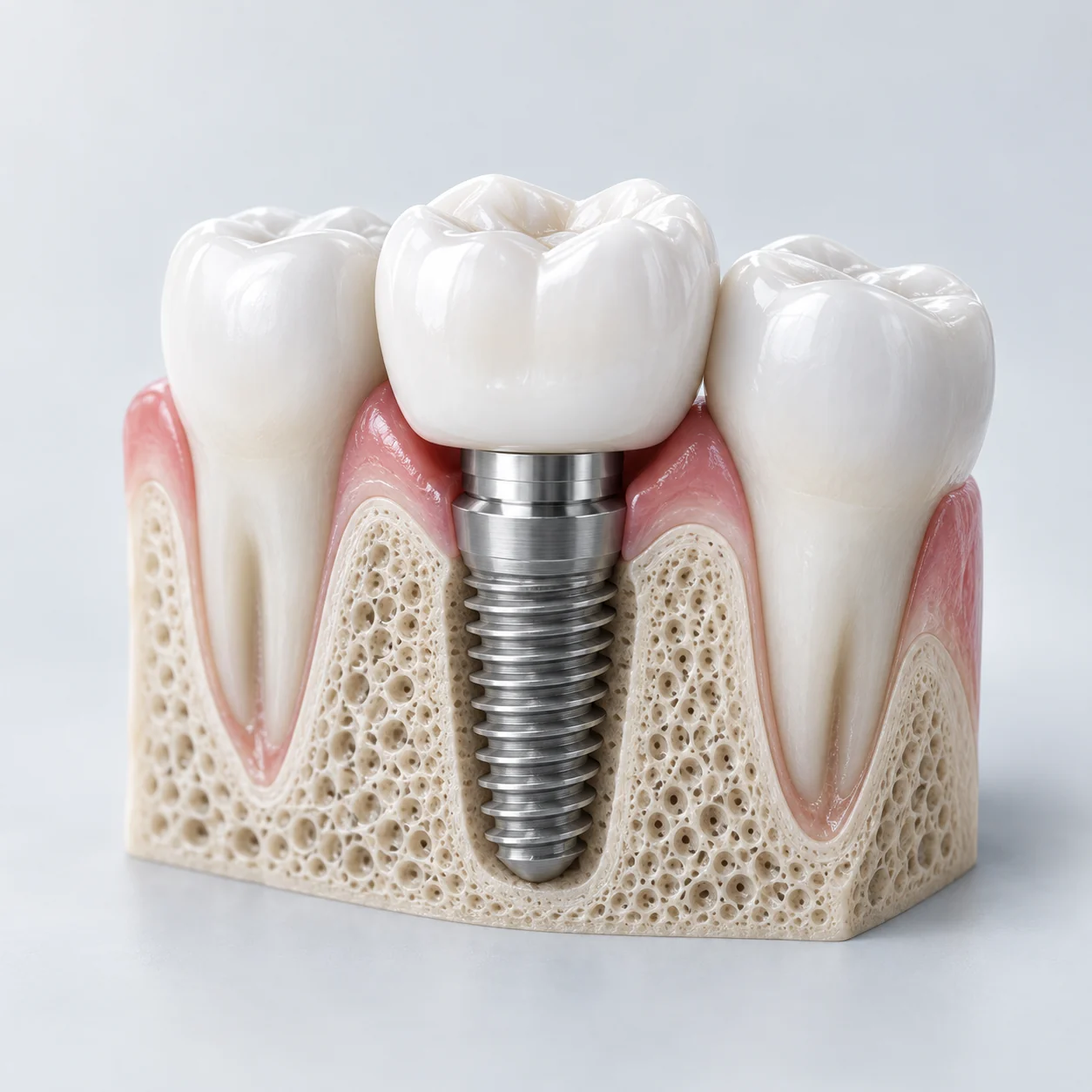
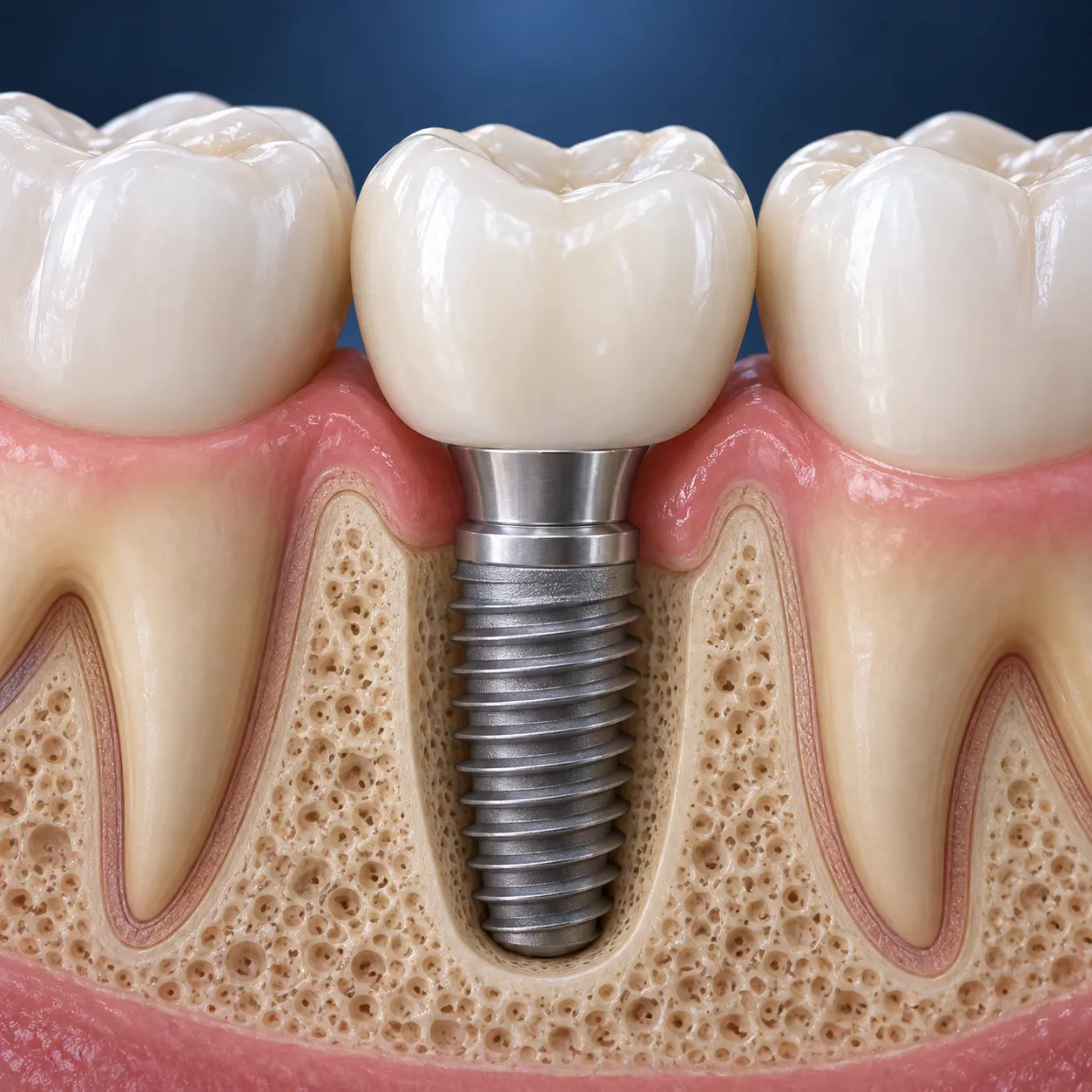
Dental implants are artificial tooth roots placed in the jawbone in order to restore missing teeth both functionally and aesthetically. Suitability for implant treatment is determined by assessing bone structure, gum health, general health and individual needs together.
What is a dental implant?
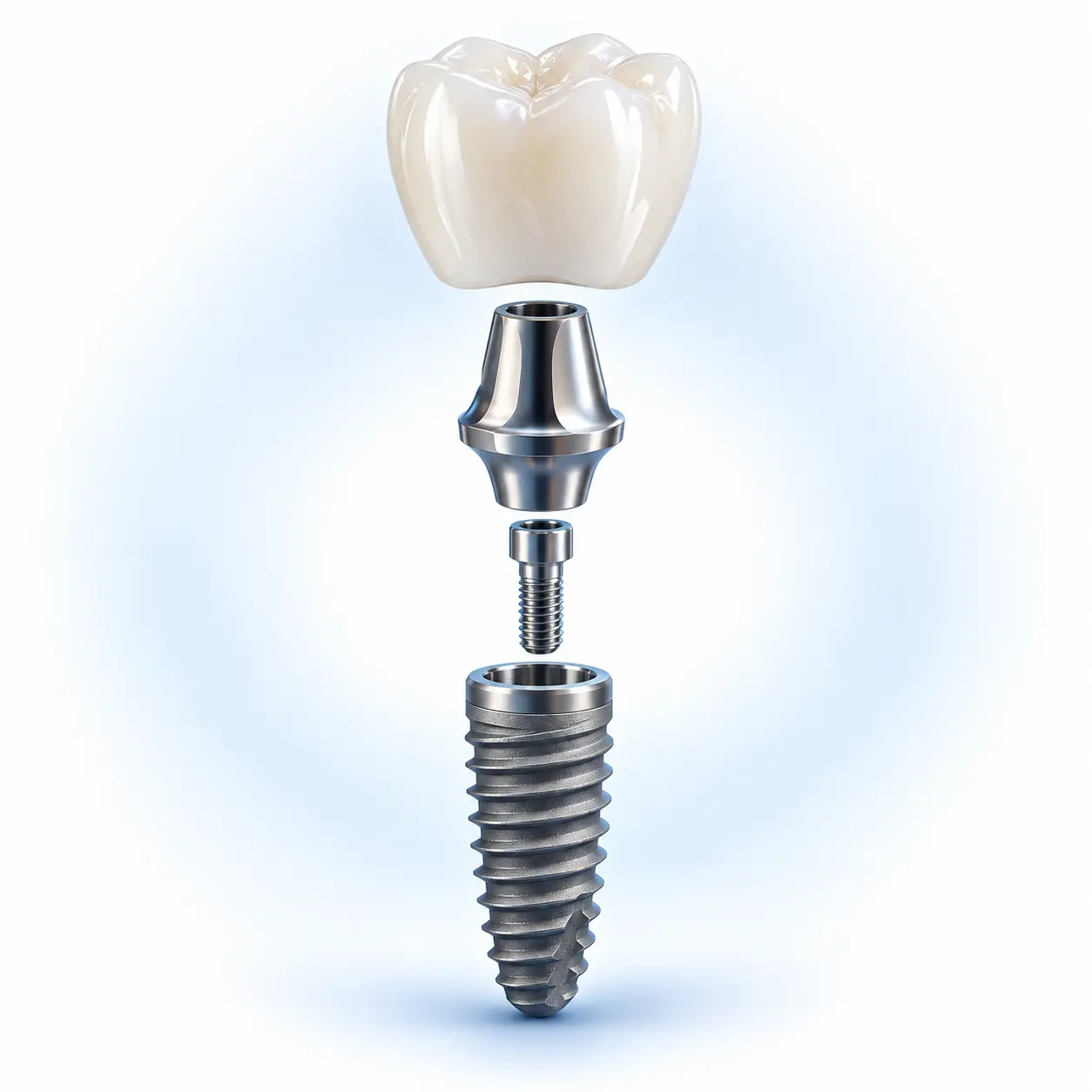
An implant is an artificial root placed in the jawbone so as to take the place of the root of the lost tooth. Its purpose is to support the prosthesis built on it from the bone. A single crown, a bridge carrying several teeth, or a fixed full-arch prosthesis may be fitted onto implants.
Which restoration is appropriate is determined by the number of missing teeth, the position of the gap, the bite relationship and aesthetic expectations. Among the material options for the restoration, zirconia crowns may also be considered.
For whom may it be considered?
The implant option may come into question for people with one or more missing teeth, those who are not satisfied with their existing denture, or those seeking a fixed solution instead of a removable one. Suitability does not depend on a single criterion:
- The number of missing teeth, the position of the gap and the condition of the neighbouring teeth
- The volume and quality of the jawbone
- Gum health and daily oral care habits
- General health, the medicines taken and smoking
These points can only be assessed together after an examination and the necessary imaging. For a comparative view of the options for replacing missing teeth, see our guide to implant treatment.
Assessment before an implant
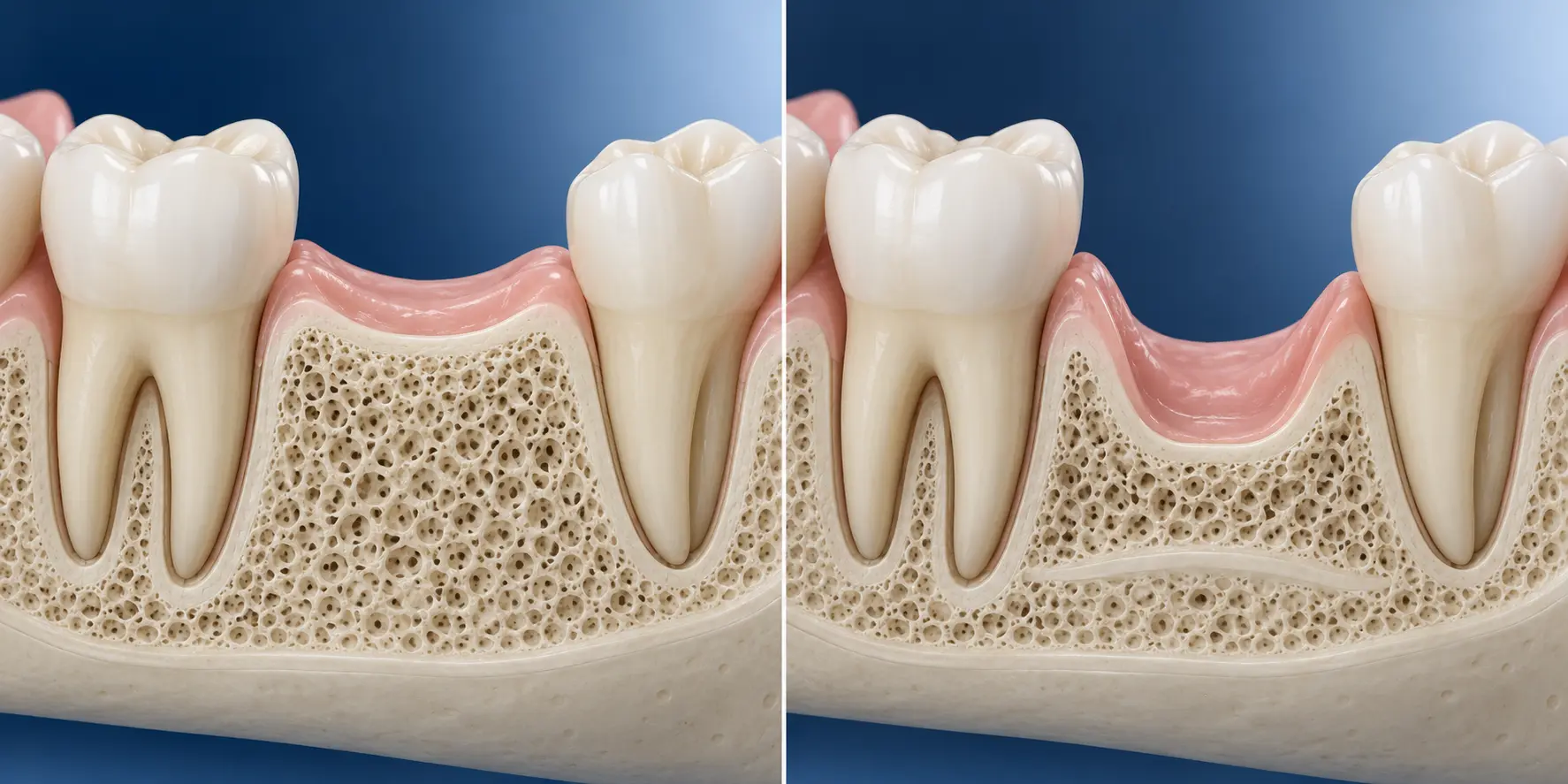
Planning is not simply a matter of measuring the gap. Medical history, medicines taken regularly, the condition of the gums, bone volume and quality, the bite relationship and smoking are all considered together. The necessary imaging is used to examine bone height, width and the neighbouring anatomical structures.
Prosthetic planning is also carried out at this stage: the position in which the implant will be placed is determined according to the design of the prosthesis that will sit on it. At the end of the assessment the options and estimated stages are shared with you; the number of implants, the duration or the outcome are not committed to before an examination.
How does treatment progress?
- Examination and imaging — clinical findings and radiographic assessment.
- Planning — determining implant position, number and the design of the restoration.
- Placement of the implant — the surgical stage, carried out under local anaesthesia.
- Healing period — the time allowed for the implant to integrate with the bone (osseointegration).
- The restoration — taking impressions and fitting the prosthesis.
- Check-ups — clinical follow-up at regular intervals, with radiographs where needed.
The duration of these stages varies according to the condition of the bone, the method used and whether any additional procedure is required.

Insufficient bone
Bone augmentation is not needed in every patient. Where bone volume is found to be insufficient, grafting or elevation of the sinus floor may come into question; this need is determined after imaging. For detail on these procedures and the surgical process in general, see the oral surgery procedures page.
Long-term success
The long-term success of dental implants is affected by many factors: appropriate case selection, planning, oral hygiene, smoking, general health, prosthesis design and regular check-ups. Some of these factors are under the dentist's control and some under that of daily habits; the period after treatment is therefore an inseparable part of the planning.
Care after an implant
The advice given after the procedure is specific to you, and following it directly affects healing. Because the tissues around an implant can also become inflamed, daily brushing, interdental cleaning and regular check-ups should not be neglected.
If you notice increasing swelling, pain that does not settle, bleeding from the gum, looseness in the prosthesis or a change in the way your bite feels, we advise you to make a check-up appointment.
Frequently asked questions
How long does implant treatment take?
The duration is determined by stages rather than by a single procedure. The healing period allowed for the implant to integrate with the bone varies according to the condition of the bone and the method used. Whether an additional procedure is needed also affects the timescale. The estimated stages are shared after examination and imaging; no fixed duration is promised.
Is there an age limit for implants?
There is no upper age limit; what matters is not age but bone and gum support together with general health. At the lower end, jaw growth is expected to be complete. Suitability is determined by examination.
Will I feel pain during the procedure?
Implant placement is carried out under local anaesthesia and comfort during the procedure is the aim. You may feel pressure and vibration. As individual experience varies, no guarantee of complete absence of pain is given.
I smoke — can I still have an implant?
Smoking is one of the factors that can adversely affect healing around the implant and the long-term outcome. On its own it may not be an absolute barrier; however, the risk is shared openly with the patient and the planning is made accordingly.
I have diabetes or another condition — is that a barrier?
Systemic conditions are not in themselves a barrier. Whether the condition is under control, the medicines taken and, where necessary, the opinion of the relevant doctor are all assessed. Some groups of medicines may call for additional assessment.
What happens if the implant fails?
Implant loss may occur early or late, and the causes differ. Once the findings have been assessed, repeat treatment, waiting for the area to heal, or alternative options may come into question. The same course is not followed in every case.
Local assessment
At our clinic at the Beylikdüzü–Esenyurt junction, suitability for implants is determined by assessing the clinical examination, the imaging findings and the prosthetic requirements together. MSc. Dt. Mehmet Taş is a graduate of Istanbul University Faculty of Dentistry and completed a master's degree in Oral Surgery and Implantology at UniCamillus University in Italy.
Dental Implant Treatment · Oral Surgery Procedures · Zirconia Crowns · Appointments and contact