






Zirconia Crowns
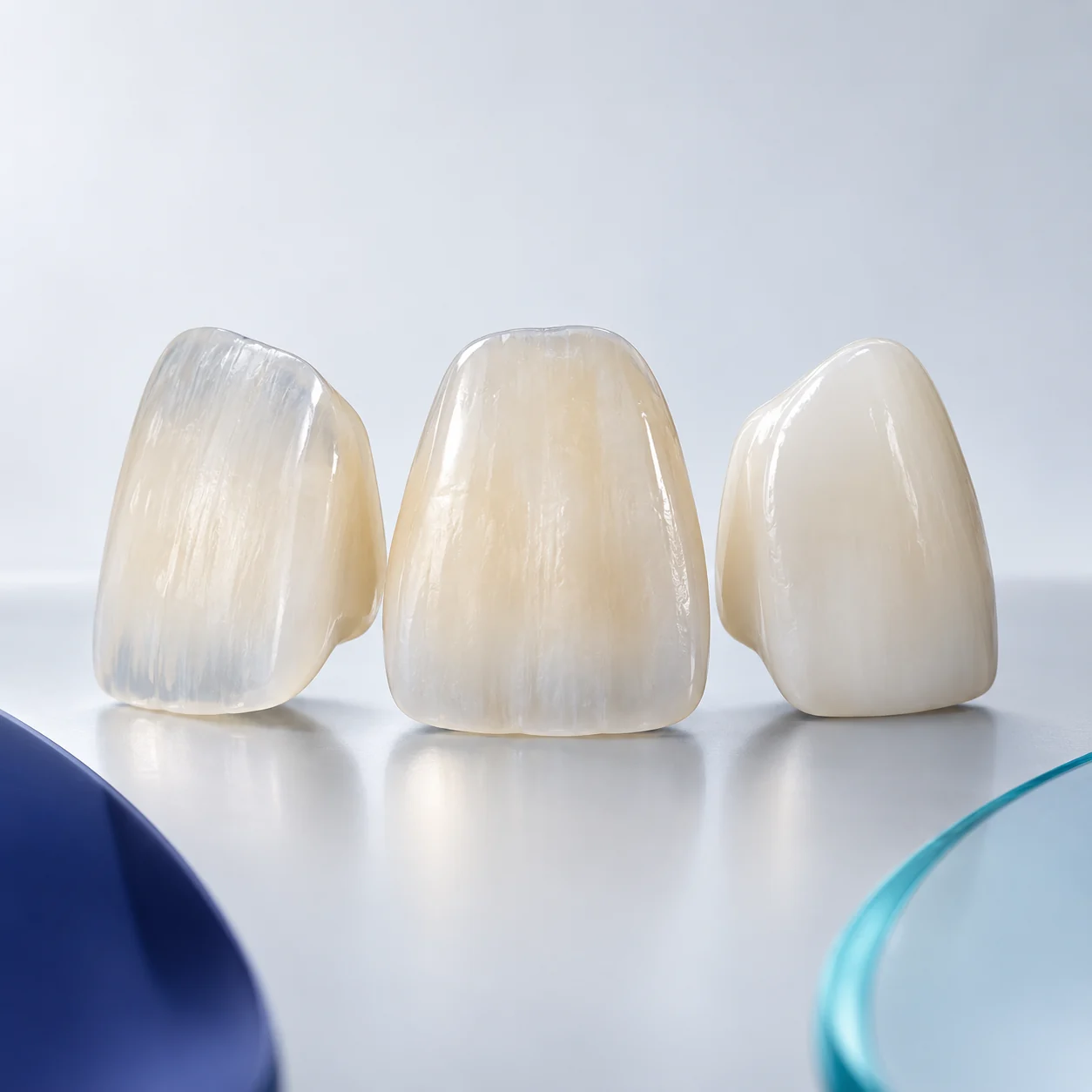
Zirconia crowns are ceramic restorations offering a range of material options directed at strength, biological compatibility and a natural appearance. The same material or the same production technique is not appropriate for every tooth; the decision is made according to the clinical examination and individual requirements.
What is a zirconia crown?
It is a zirconia-based ceramic restoration that encases the visible part of the tooth. The aim is to rebuild the lost form, chewing function and aesthetics through personalised planning.
In which situations is it considered?
- Extensive loss of tooth substance and large restorations
- Fractured or worn teeth
- Changes in colour and shape
- The need for a bridge
- The need for a restoration on an implant
Preliminary assessment
Tooth and gum health, the remaining tooth structure, the bite, any clenching or grinding habit, aesthetic expectations and alternative treatments are all assessed together. Healthy tooth structure is preserved as far as possible; a crown is not presented as the only option. Options such as bonding, inlays/onlays, laminate veneers or E.max are explained according to suitability.
The digital workflow
- Examination and taking records
- Any necessary preparation
- Intraoral scanning or impression
- Digital design and try-in
- Fabrication
- Checking fit, occlusion and aesthetics
- Fitting
Monolithic and layered options
Monolithic zirconia is produced as a single body and is focused on strength. In the layered approach, colour, texture and the behaviour of light can be enhanced with an aesthetic veneering ceramic. The choice is made according to the position of the tooth and the load it carries.
The difference between zirconia and E.max
Zirconia offers different options in strength and translucency; lithium disilicate (commonly known as E.max) can stand out for its translucency, particularly in selected aesthetic areas. The choice is made according to the position of the tooth and the loading conditions.
| Aspect | Zirconia | E.max / lithium disilicate |
|---|---|---|
| Main strength | A range of strength options and broad field of use | High translucency and aesthetic characterisation |
| Planning note | Includes the posterior region, bridges and implant-supported work; the type of material is chosen according to aesthetic requirements. | May be considered particularly in selected anterior and single-tooth restorations. |
| Deciding factor | No single material is superior for everyone. Tooth structure, position, bite forces, the underlying colour, the span of the restoration and the aesthetic goal are all decisive together. | |
How is a natural appearance planned?
The colour of the neighbouring teeth, surface texture, translucency, the gum margin, tooth proportions, the smile line and the appearance under light are all assessed together. For a comprehensive aesthetic plan, see also the smile design page.
Care and check-ups
Daily brushing, interdental cleaning, maintaining gum health and regular check-ups have a direct effect on the long-term outcome. If there is clenching or grinding, a protective guard may be considered.
Frequently asked questions
How long does a zirconia crown last?
No fixed period or guarantee of service life can be given. The choice of material, the preparation, the bite, oral hygiene, any clenching habit and regular check-ups all affect the long-term outcome.
Does zirconia look natural?
With the right shade, surface texture, thickness and laboratory characterisation, a close approach to a natural appearance is possible; the result depends on individual circumstances.
Does the tooth need to be prepared?
The amount of preparation required depends on the existing structure of the tooth and the restoration chosen. More conservative alternatives are assessed at the examination.
Zirconia or E.max?
This decision is not made on aesthetics alone. The position of the tooth, the remaining structure, the bite load, the underlying colour and the design of the restoration are all assessed together.
Local assessment
At our clinic at the Beylikdüzü–Esenyurt junction, suitability for zirconia crowns is determined by assessing the remaining tooth structure, gum health, the bite relationship and aesthetic expectations together.
Aesthetic Dentistry · Personalised Smile Design · Dental Implant Treatment · Appointments and contact