






Root Canal Treatment
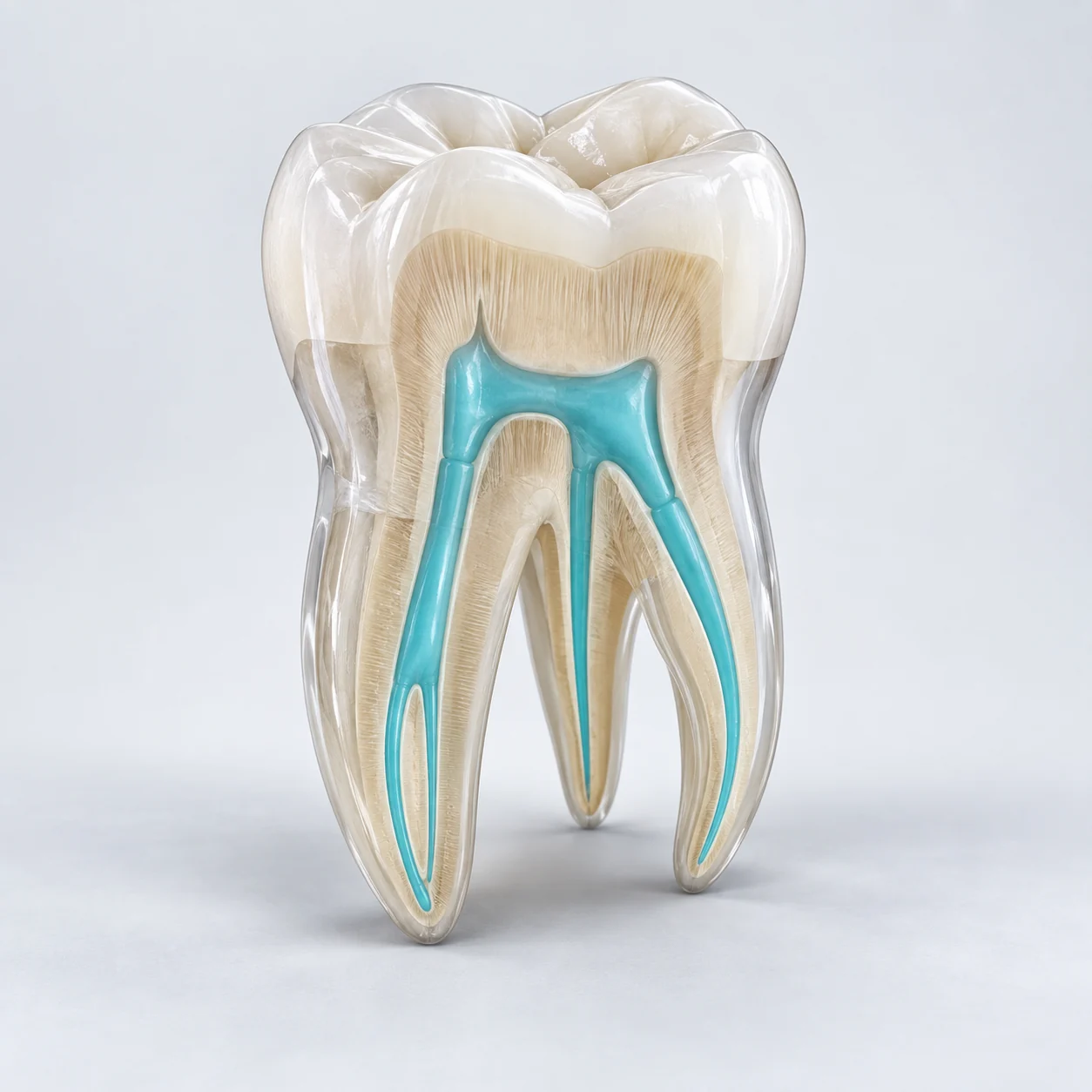
The purpose of root canal treatment is to keep a tooth in the mouth, where possible, when the pulp tissue has been irreversibly damaged or has become infected. The decision to treat is not based on pain alone; it is made by assessing the examination, pulp tests and imaging findings together.
At our clinic, root canal treatment is carried out by our endodontic specialist under magnification with loupes. Retreatment of a previous root canal and, where necessary, apical surgery (apicectomy) are also carried out within the same scope.
What is root canal treatment?
When the pulp tissue of a tooth is irreversibly damaged or becomes infected, it is the procedure of cleaning, shaping and disinfecting the root canals and filling them with a suitable material.
In which situations is it considered?
Deep decay, trauma, cracks or fractures, inflammation or necrosis of the pulp, signs of infection in the tissues around the root tip, and certain restorative requirements may all bring root canal treatment into question.
What are the possible signs?
Pain arising spontaneously or at night, prolonged sensitivity to heat and cold, pain on chewing, swelling, a change in the colour of the tooth or discharge from the gum may all occur. Some teeth give no sign at all, which is why regular check-ups matter.
Diagnosis and planning
The history of the pain, the clinical examination, pulp tests, percussion and palpation findings, assessment of the gums and the necessary radiographs are all interpreted together. No decision is made on the basis of a single sign.
Important information: Antibiotics are not a substitute for the mechanical cleaning of an infected root canal. Where there are systemic signs or a risk of spread, the need for medication is assessed separately by the dentist.
How does treatment progress?
- Local anaesthesia and isolation
- Preparing the access cavity
- Determining the working length and canal anatomy
- Cleaning, shaping and irrigation
- Filling the canals
- Coronal seal and review
One appointment or several?
The number of appointments depends on the condition of the pulp, signs of infection, canal anatomy, whether retreatment is needed and the clinical circumstances. No fixed number of appointments is promised before an examination.
Root canal retreatment
Where symptoms persist, or there is leakage, a missed canal, an inadequate filling or suspicion of new infection, the previous root filling may be removed and retreatment considered. This procedure is likewise carried out at our clinic by our endodontic specialist.
The final restoration and follow-up
Whether a filling, an onlay or a crown is needed on a tooth that has completed root canal treatment is determined by the remaining tooth structure, the risk of fracture, the position of the tooth and the chewing load. Clinical follow-up is carried out, with radiographs where needed.
| Option | When may it be considered? | Planning note |
|---|---|---|
| Direct composite filling | Sufficient sound tissue and limited loss of substance | The coronal seal and checking the bite are important. |
| Onlay / overlay | Selected cases requiring cuspal coverage but not full circumferential preparation | May be considered as an adhesive option that preserves the remaining tissue. |
| Full crown | Extensive loss of substance, risk of fracture or existing restorative circumstances | Not an automatic requirement for every root-treated tooth. A zirconia crown is one of the options. |
The type of restoration is chosen individually after the examination, by assessing the remaining sound tissue, the position of the tooth, the bite load, the risk of fracture and the conditions for isolation.
Frequently asked questions
Is root canal treatment painful?
Comfort during the procedure is the aim, using local anaesthesia; the degree of inflammation and individual circumstances may affect the experience. No guarantee of complete absence of pain is given.
Is pain after treatment normal?
There may be tenderness on chewing in the first few days. With increasing pain, marked swelling, fever or difficulty swallowing or breathing, you should contact the clinic without delay.
Does every root-treated tooth need a crown?
No. The final restoration may be a filling, an onlay or a crown, depending on the remaining tissue, the group of teeth, the risk of fracture and the functional load.
What is done if the treatment is unsuccessful?
Depending on the diagnosis, options such as root canal retreatment, apical surgery or extraction may be considered; not every option is appropriate for every tooth.
Local assessment
At our clinic at the Beylikdüzü–Esenyurt junction, the need for root canal treatment is determined by assessing the clinical examination, pulp tests and the necessary imaging findings together.
Oral and Dental Health · Zirconia Crowns · Oral Surgery Procedures · Appointments and contact