






What Is a Zirconia Crown? Advantages and Limits
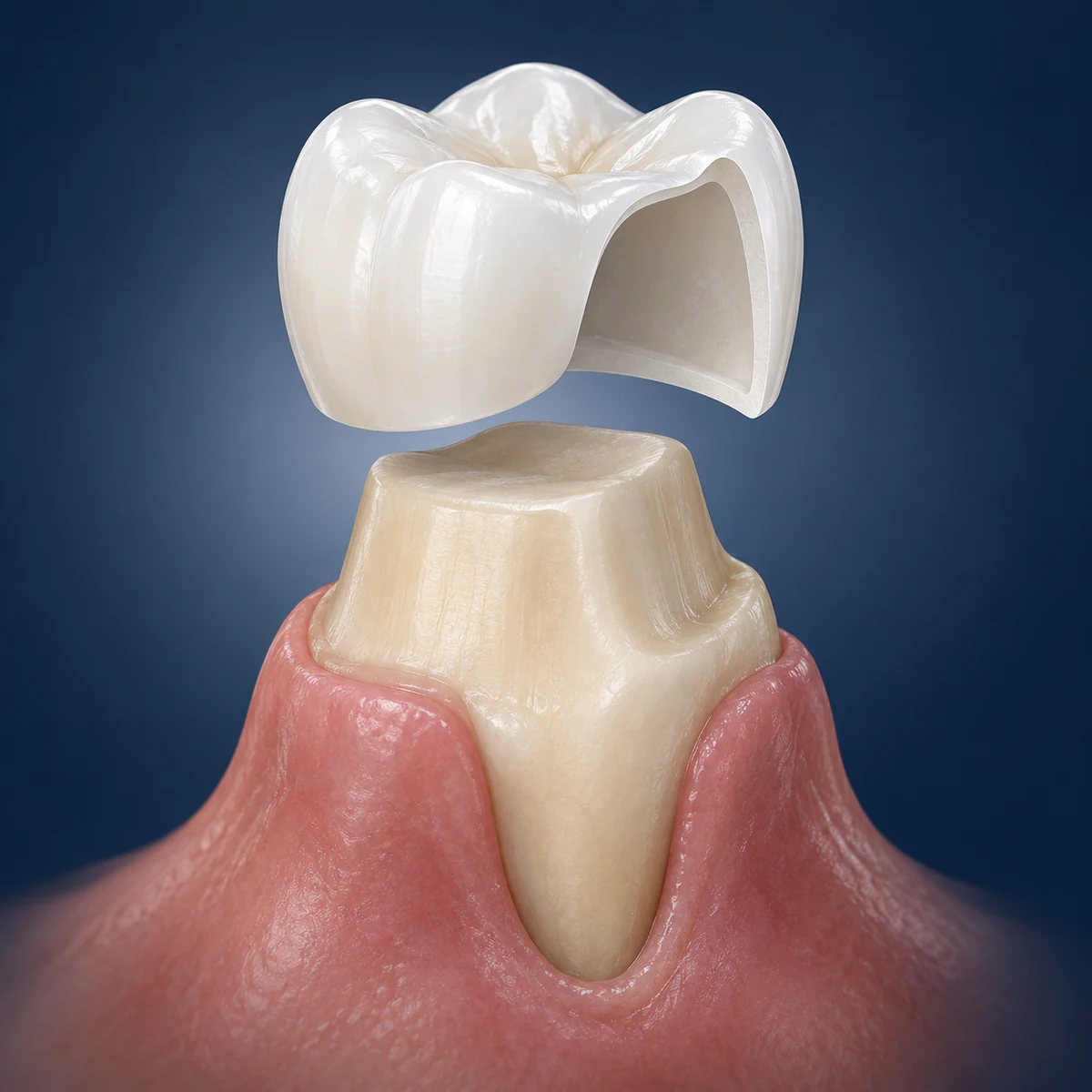
Zirconia is a metal-free ceramic material used in dentistry to make crowns and bridges. Because it transmits light in a way close to natural tooth structure and has high fracture resistance, it is considered for both the anterior and posterior regions. However, there is no single correct material for every mouth: the choice is made according to the position of the tooth, the remaining sound tissue, the bite load and aesthetic expectations.
What is a zirconia crown?
It is a restoration built on a zirconium oxide substructure, with porcelain layered on where required. Its main difference from metal-ceramic is that it contains no metal substructure; it therefore carries no risk of the grey shadow that can appear at the gum margin over time.
There is no single type of zirconia. More translucent types are preferred for aesthetics in the anterior region, and stronger types for the chewing load in the posterior region. Which type will be used is planned together with the laboratory.
When is it considered?
- Teeth with extensive loss of substance that cannot be adequately supported by a filling
- Root-treated teeth with an increased risk of fracture
- Anterior teeth where a change of colour and form is planned restoratively
- Bridge plans where a missing tooth is to be replaced with support from the neighbouring teeth
- People with a history of metal allergy
- Planning of implant-supported prostheses — for detail see Dental Implant Treatment
The difference between zirconia and e.max
| Criterion | Zirconia | E.max (lithium disilicate) |
|---|---|---|
| Structure | Zirconium oxide substructure, with a porcelain layer where required | Single-piece glass ceramic |
| Translucency | Varies by type; highly translucent types exist | Generally more translucent |
| Strength | Higher fracture resistance | Lower; not preferred for long-span bridges |
| Typical use | Posterior region, bridges, implant-supported work | Single anterior teeth, veneers |
This comparison is not a ranking of superiority. One material may be planned for the anterior region and another for the posterior region in the same mouth. For aesthetic planning as a whole, see the Personalised Smile Design page.
Preparation and the stages of treatment
- Examination and planning. Gum health, decay, the bite, any clenching or grinding habit and the remaining sound tissue are assessed.
- Preliminary work. Any decay and gum problems are dealt with; root canal treatment is completed if needed.
- Tooth preparation and impression. The tooth is prepared only as much as the chosen material requires; an impression or digital scan is taken.
- Temporary restoration. The tooth is protected during the laboratory stage and the form is trialled.
- Try-in and cementation. Fit, occlusion and shade are checked before it is fixed in place.
- Review. Fit and the response of the gum are assessed in the first weeks.
Gum health and care
The long-term outcome of a crown has more to do with marginal fit and daily care than with the material. If the area where the crown margin meets the gum is not cleaned, inflammation and discolouration can develop there. Using an interdental brush or floss, cleaning beneath bridges and attending regular check-ups are therefore part of the treatment.
In people who clench or grind their teeth, a night guard may come into question. Habits such as cracking hard-shelled food with the teeth or chewing ice increase the risk of fracture both in natural teeth and in restorations.
Limits worth knowing
A zirconia crown requires part of the tooth structure to be removed; it is an irreversible procedure. Options involving less loss of tissue (fillings, onlays, veneers) are therefore considered first. If whitening is planned, the order matters so that the shade of the crown can be matched to it; the detail is on the Teeth Whitening page.
Frequently asked questions
How long does a zirconia crown last?
The duration varies from person to person. Marginal fit, gum health, the bite load, any clenching habit and daily care are decisive. No definite lifespan can be promised.
Will there be sensitivity after a crown?
Sensitivity to heat and cold may occur in the first few days and usually settles. Pain that increases or persists calls for a review.
Does the colour of a crown change over time?
The colour of zirconia itself is not lightened by whitening, and it does not stain with drinks such as coffee and tea as much as a natural tooth does. Surface stains can be removed by cleaning.
Is a zirconia crown made for every tooth?
No. If the remaining sound tissue is sufficient, options involving less loss of tissue, such as a filling or an onlay, are considered first.
At our clinic at the Beylikdüzü–Esenyurt junction, the decision on a crown is made after assessing gum health, the bite and the remaining sound tissue together.
Zirconia Crowns · Aesthetic Dentistry · Appointments and contact