






Teeth Whitening
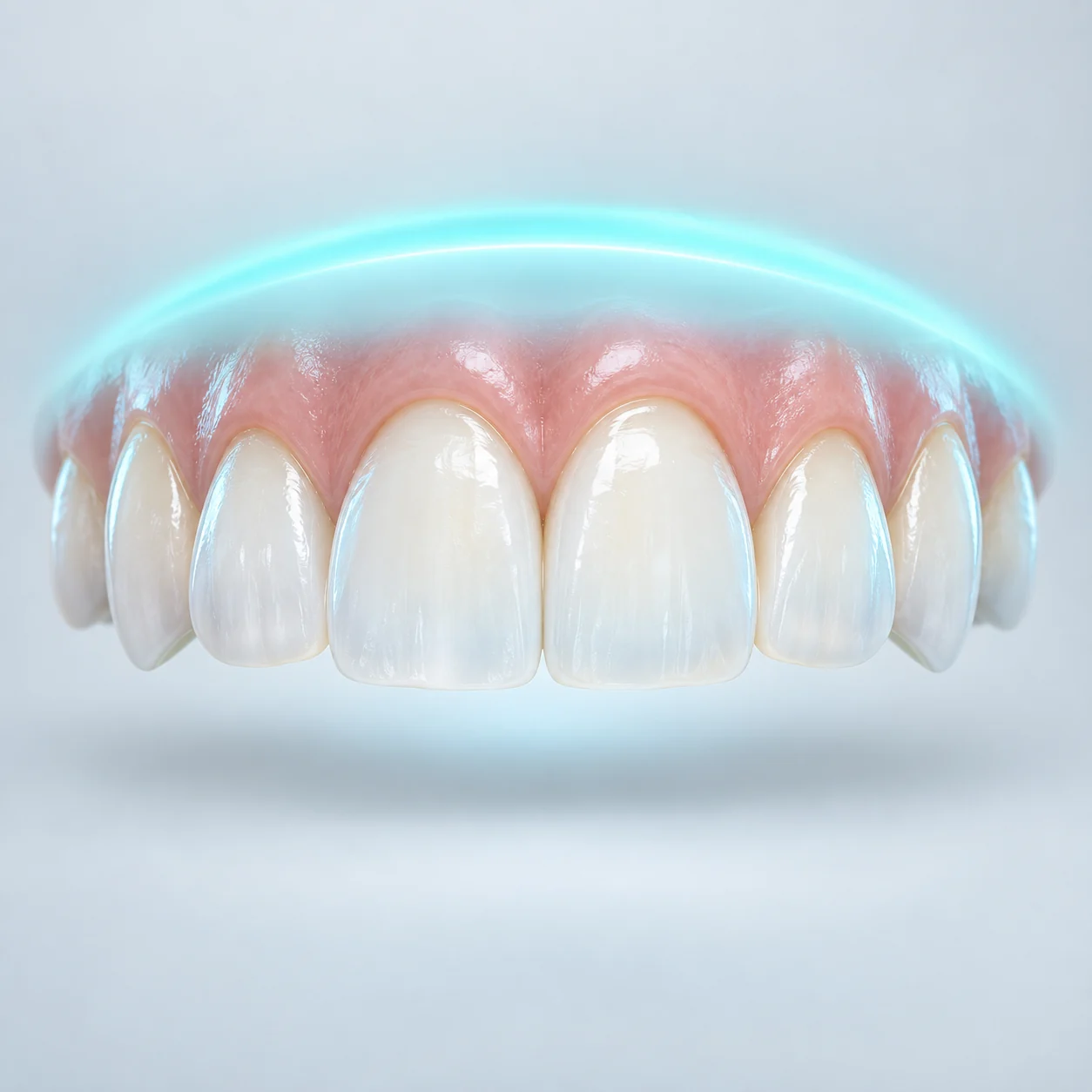
Teeth whitening is an aesthetic procedure that aims to move the existing colour of the natural tooth structure to a lighter shade. The change that can be achieved is individual; the starting shade, the type of discolouration, the structure of the teeth, the protocol chosen and the individual response all determine the outcome. For this reason no particular number of shades and no definite result can be promised in advance.
Whitening is not a procedure that covers over problems in the mouth. If there is decay, a leaking filling, gum inflammation or exposed root surface, these are addressed first; whitening comes into question once those stages are complete.
What is teeth whitening?
It is a procedure that aims to lighten discolouration in the natural tooth structure, following assessment by the dentist and using appropriate peroxide-based protocols. The whitening agent chemically alters the coloured molecules within the enamel and dentine.
It is not the same as scaling and polishing: cleaning removes deposits and surface stains from the tooth; whitening aims to change the shade of the natural tooth structure itself. In some people a visible lightening occurs after cleaning and polishing alone, and whitening may not be needed.
Why does tooth colour change?
| Type of discolouration | Main causes | Response to whitening |
|---|---|---|
| Extrinsic | Tea, coffee, red wine, tobacco products, some mouthwashes, surface deposits | Generally responds more noticeably; often addressed together with cleaning and polishing |
| Intrinsic | Age-related changes in dentine, discolouration after trauma, developmental disorders, a history of certain medicines | The response is more variable; in some cases whitening alone may not be sufficient |
| Mixed | A combination of the above | The order and method are determined by the examination findings |
What whitening changes, and what it does not
Whitening affects only the natural tooth structure. The colour of fillings, crowns, bridges, veneers and implant-supported prostheses in the mouth does not change. This matters for people with visible restorations in the anterior region: when the natural teeth lighten, existing restorations may remain darker and a mismatch in colour may appear.
Where this is a possibility, it is discussed beforehand at the examination. In some people, once the colour has settled after whitening, replacing visible restorations may come into question; this is a separate planning matter and is covered on the Zirconia Crowns and Personalised Smile Design pages.
What is assessed at the examination?
- The presence of decay, cracks, wear and leaking restorations
- Gum health, pocket depth and any recession
- Exposed root surface and existing sensitivity
- The condition of the pulp and any history of trauma
- The type and extent of the discolouration
- The position of fillings, crowns and veneers in the mouth
- The bite relationship and any clenching or grinding habit
- Pregnancy and breastfeeding, and general medical history
You can find what is assessed at a first examination as a whole on the First Dental Examination and Treatment Planning page.
When is it postponed?
If there is untreated decay, a leaking filling, active gum inflammation or marked sensitivity, whitening waits until these findings have been resolved. Whitening for aesthetic purposes is generally postponed during pregnancy and breastfeeding. Where there is heavy intrinsic discolouration, developmental enamel defects or a large number of visible restorations, the expected result may be limited; in that case the options and the differences between them are discussed together at the examination.
What methods are available?
| Method | How it is carried out | Distinguishing feature |
|---|---|---|
| In-office | The whitening agent is applied in a controlled way under the dentist's supervision, with the gums and soft tissues protected | Carried out at the clinic; dose and duration are under the dentist's control |
| Dentist-supervised home whitening | An impression is taken and a custom tray made; the amount of gel, the daily wearing time and the total duration are set by the dentist | Progresses more gradually; depends on consistent use |
| Combined | In suitable cases, in-office treatment and home use are combined in a planned way | The sequence and duration are set individually |
| Single-tooth whitening | A protocol applied from inside a tooth that has had root canal treatment and has darkened | Only in suitable cases; the condition of the tooth is assessed separately |
The method is chosen according to the type of discolouration, any sensitivity, the restorations present in the mouth and the person's daily routine. No method is superior for every mouth.
How does the process work?
- Examination and shade record. A clinical assessment is made, imaging is requested if needed and the starting shade is recorded.
- Preparation. Any decay, leaking restorations and gum problems are dealt with; cleaning and polishing are carried out.
- Information and consent. The expected range of change, possible sensitivity, the fact that restorations will not change colour and the possibility of touch-ups are explained.
- Application. Carried out at the clinic, at home, or both together, according to the protocol chosen.
- Review. Once the colour has settled the result is assessed; the need for a touch-up is determined at this review.
Sensitivity and possible effects
The most common effect is temporary sensitivity to heat and cold. Temporary irritation of the gums may also occur. These effects usually settle shortly after the treatment ends. In people with a history of sensitivity, the dose, application time and interval between sessions are planned accordingly; supportive products are added where necessary.
If sensitivity lasts longer than expected, continues to increase, or an area of the gum does not heal, you should call the clinic. Extending the application on your own initiative, or increasing the amount of gel, can make sensitivity worse.
How long does the result last?
How long it lasts varies from person to person. Coloured drinks, tobacco use, oral care habits and the structure of the tooth surface all directly affect the duration. Limiting dark-coloured drinks and foods in the first days after treatment is advised. Some regression in shade over time is usual; the need for a touch-up is determined at a review appointment.
Over-the-counter whitening products
Whitening strips, pens and gels sold without a prescription may not give the expected result when used without the condition of the mouth being assessed. The real problem can be missed: if the darkening is caused by decay, a leaking filling or a change in the pulp after trauma, a product applied to the surface will not correct it and will delay diagnosis.
Abrasive “whitening” toothpastes and home methods such as bicarbonate of soda can wear the enamel surface over time; the dentine exposed as a result looks more yellow and sensitivity may increase. If you are considering a product, it is safer to ask about it at your examination.
Frequently asked questions
Does whitening damage the enamel?
When carried out for an appropriate indication, under the dentist's supervision and at the recommended dose and duration, whitening is a well-established procedure. Risk is associated more with uncontrolled use, excessive dose and extending the application on one's own initiative.
How many shades lighter will my teeth be?
A number cannot be given in advance. The starting shade, the type of discolouration, the structure of the teeth and the individual response determine the outcome. The expected range of change is discussed at the examination.
Will my crowns whiten too?
No. The colour of fillings, crowns, bridges and veneers does not change. When the natural teeth lighten, these restorations may remain darker; where this is a possibility it is discussed beforehand.
I have sensitivity — can it still be done?
In most cases it can be assessed. The cause of the sensitivity is investigated first; if there is exposed root surface, a crack or decay, these are addressed. The protocol is adapted to the sensitivity.
Does whitening replace scaling?
No. They are different procedures. Cleaning removes deposits from the tooth surface; whitening aims to change the shade of the natural tooth structure.
One of my teeth is dark — what can be done?
Darkening of a single tooth is often related to a history of trauma or root canal treatment. Once the vitality of the tooth and the condition around the root tip have been assessed, internal whitening or restorative options are discussed. The Root Canal Treatment page may also help here.
How often can it be repeated?
The interval between repeats is set individually. Because frequent repetition can increase sensitivity, the decision is made according to the findings at a review appointment.
Local assessment
At our clinic at the Beylikdüzü–Esenyurt junction, teeth whitening is planned after assessing the type of discolouration, gum health, existing restorations and any sensitivity together. The expected change and the care required are explained before treatment.
Aesthetic Dentistry · Personalised Smile Design · Zirconia Crowns · Treatment Plan and Process · Appointments and contact