






First Dental Examination and Comprehensive Treatment Planning
A comprehensive first examination means listening to the complaint, taking a medical and dental history, clinically assessing the mouth and surrounding tissues, and interpreting together only those records that are considered necessary. The treatment plan is then drawn up in stages on the basis of these findings, the patient's priorities and the options available.
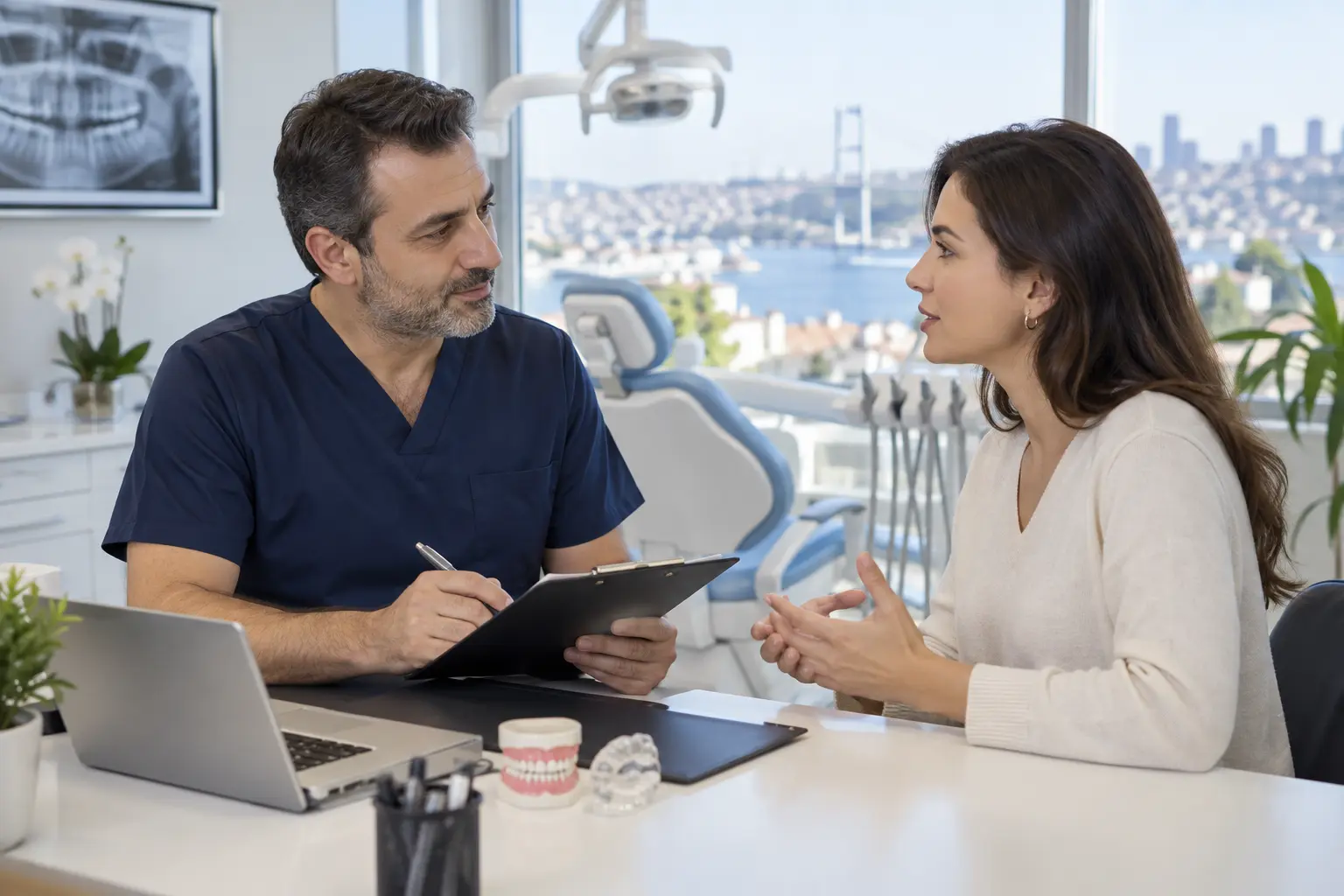
Reason for attending and expectations
Pain, aesthetic expectations, difficulty chewing, missing teeth, existing restorations and priorities are recorded in the patient's own words. The first aim is not merely to choose a procedure but to understand the needs and the criteria by which decisions will be made.
Medical and dental history
Systemic conditions, allergies, the possibility of pregnancy, previous operations and treatments, medicines taken and past dental experiences are all asked about. Where necessary the opinion of the patient's treating doctor is sought; patients should not stop their medicines on their own initiative. For treatment planning in pregnancy, see the Dental Treatment in Pregnancy page.
Extraoral and soft tissue examination
Facial symmetry, jaw movements, lymph nodes and any relevant extraoral findings, together with the soft tissues such as the lips, cheeks, tongue, palate and floor of the mouth, are assessed systematically. If a suspicious finding is detected, further assessment and any necessary tests are arranged.
Teeth and existing restorations
Suspected decay, fractures and wear, changes in colour, sensitivity, tooth mobility, the condition of fillings, crowns and bridges, and areas of missing teeth are all assessed through clinical findings. Vitality and other supporting tests are added where needed.
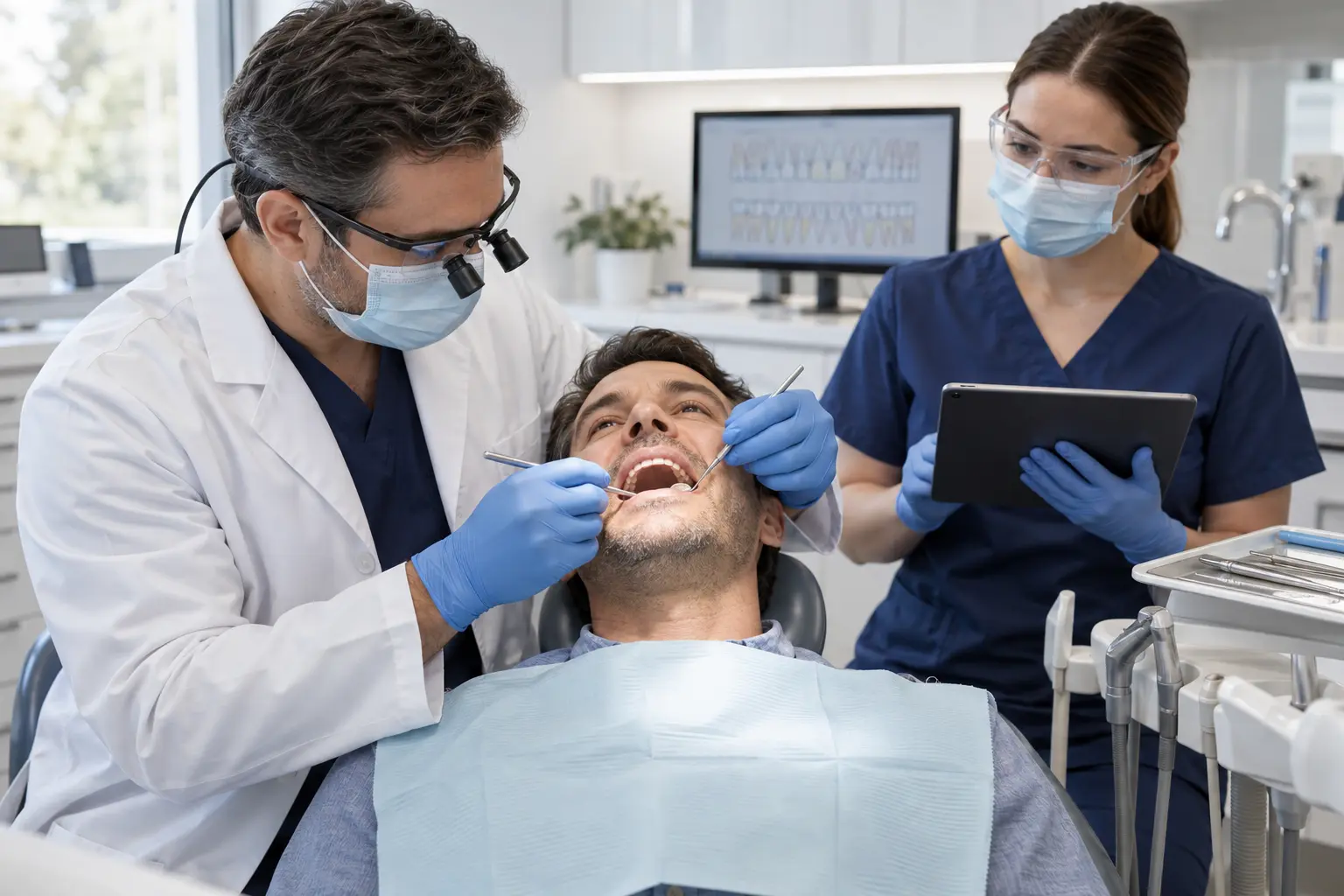
Gum and periodontal assessment
Plaque and calculus, bleeding, gum recession, pocket depth, the supporting tissues and risk indicators are all assessed. Gum health may change the order of treatment before implant, prosthetic or aesthetic procedures.
How are the examination findings used together?
| Record | What it contributes | Principle of use |
|---|---|---|
| Clinical examination | Findings on the teeth, gums, soft tissues, jaw joint and bite | The basic assessment for every patient, its extent set according to need |
| Radiographic record | Assessment of roots, bone and interproximal areas that cannot be seen | Only the imaging made necessary by the history, previous records and clinical findings |
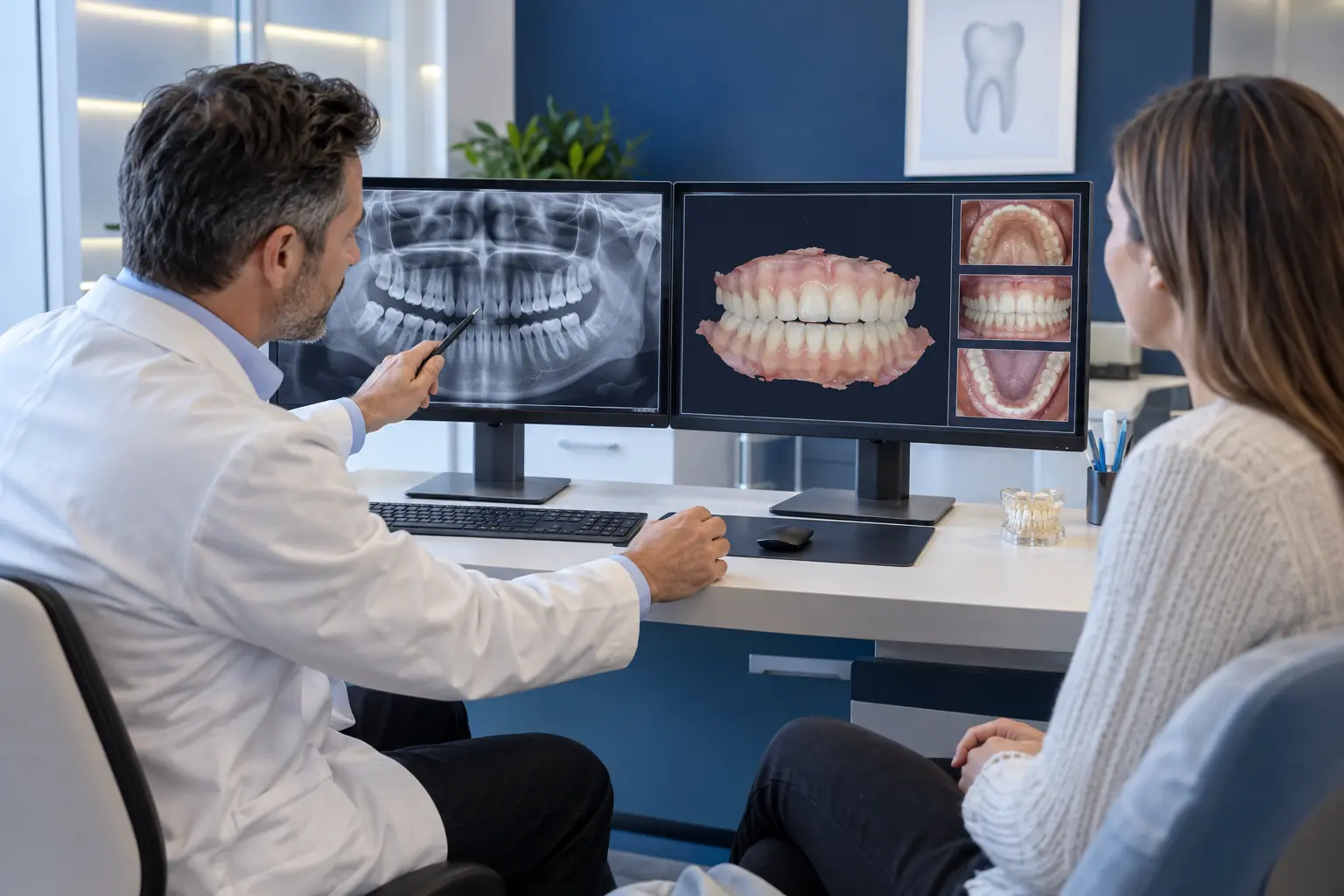
| Photographs / digital scan | A record that helps document the starting condition, the dental arch and the bite | According to the type of treatment and the planning required; not a definitive diagnosis on its own |
Important: A panoramic radiograph, a CBCT scan, photographs or a digital scan are not an automatic package for every patient. The date and diagnostic adequacy of previous records are assessed; new records are taken only where there is a clinical need.
Bite, joint and function
Tooth contacts, the chewing relationship, mouth opening, joint and muscle complaints, and signs of wear from clenching and grinding are all assessed. A single sound or area of wear does not in itself mean there is disease or that a guard is needed.
Choice of imaging
Bitewing, periapical, panoramic or three-dimensional imaging is chosen according to the examination findings and the procedure planned. A CBCT approach is not used for every patient; the expected diagnostic benefit is weighed against radiation exposure.
The role of digital records
Records taken with an intraoral scanner, standardised photographs and digital models can help document the starting condition, the bite and the restorative plan. Software output does not replace the dentist's examination and clinical verification.
Diagnosis and risk assessment
Decay, gum disease, pulp and periapical problems, the risk of fracture, hygiene, smoking, diet and care habits are all considered together. Where findings cannot be confirmed, monitoring or additional tests may be arranged.
The staged treatment plan
- Control of acute pain and infection
- Arresting the disease and establishing basic gum health
- Definitive restorative, surgical or prosthetic stages
- Maintenance and a check-up interval set individually
The clinical situation may alter this order. For what the plan contains and how it is updated, see the Treatment Plan and Process page.
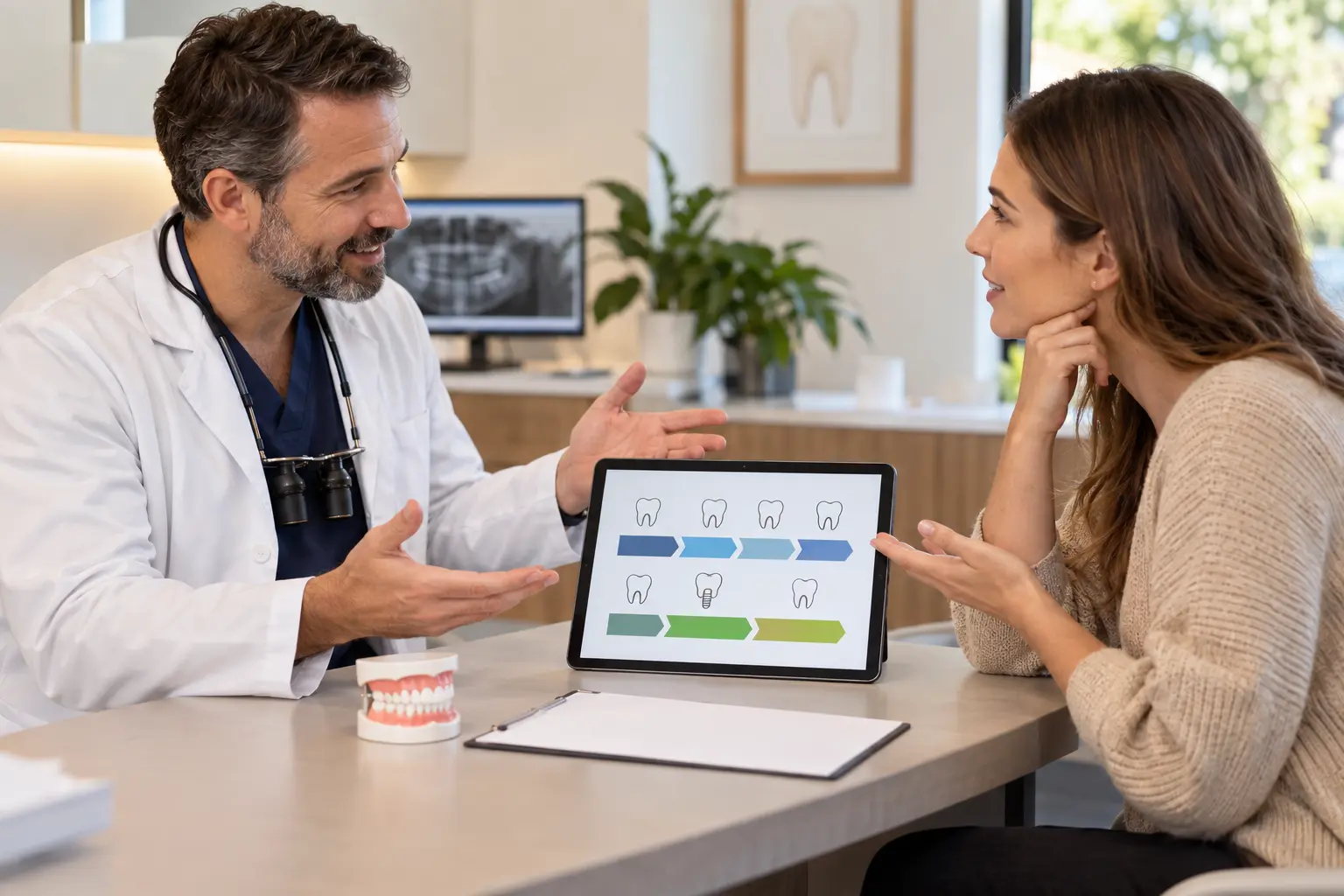
Options and the process
The purpose of each applicable option, its significant benefits and risks, the alternatives, the likely consequences of leaving the condition untreated, and the estimated duration and scope are all discussed in plain language. The plan may be updated in the light of new clinical findings or the response to healing. Informed consent is not merely a signature; it is a process of clear explanation and of being able to ask questions.
Frequently asked questions
Is treatment carried out straight away at the first examination?
Not always. The priority is assessment and safe planning. Acute pain, or a simple procedure that is appropriate, may be dealt with on the same day if there is time and consent. Comprehensive treatment usually begins after planning.
Is a panoramic radiograph requested for every patient?
No. The type and timing of imaging are determined by the history, the clinical examination, previous radiographs and the procedure planned. If existing records are adequate, they are not needlessly repeated.
How are priorities set in the treatment plan?
Emergency care and infection control come first; once basic stages such as gum and decay control are complete, definitive restorations, implants and prosthetics or aesthetic procedures are planned.
Can I bring my existing records for a second opinion?
Yes. Radiographs, reports, implant details and previous treatment records can all help the assessment. However, if they are not recent enough or the image quality is inadequate, additional records may be needed.
Local assessment
At our clinic at the Beylikdüzü–Esenyurt junction, the first examination is treated as a comprehensive planning process in which the complaint, the medical history, dental and gum health, the bite, and only the necessary clinical and digital records are all assessed together.
Dental Emergencies · Treatment Plan and Process · Dental Implant Treatment · Appointments and contact