






Paediatric Dentistry: First Examination, Decay in Primary Teeth and Preventive Care
A child's first dental examination is recommended within six months of the first primary tooth appearing, or by the first birthday at the latest. The purpose of this visit is usually not treatment but to assess the risk of decay, to give the family age-appropriate advice on care and diet, and to let the child become familiar with the clinic. If treatment is later needed, the process is generally easier to manage in a child who has attended early.

At our clinic, our child patients are assessed and treated by our paediatric dentistry specialist.
Why do primary teeth matter?
Primary teeth are not merely a temporary set; they serve chewing, the development of speech, and the preservation of space for the permanent teeth. Neighbouring teeth can drift into the gap left by a primary tooth lost early, narrowing the space needed for the permanent tooth.
| Function | Explanation |
|---|---|
| Chewing and nutrition | A painful or decayed tooth can limit a child's chewing and the variety of their diet. |
| Speech development | The front teeth contribute to the formation of certain sounds. |
| Space maintenance | Each primary tooth holds space for the permanent tooth beneath it. Early loss can lead to narrowing of that space. |
| Jaw development | Balanced chewing supports the development of the jaws and muscles. |
How does decay in a primary tooth begin, and how is it noticed?
The enamel of a primary tooth is thinner than that of a permanent tooth, so decay can progress faster in some children. There may be no pain in the early stages, which is why regular check-ups matter rather than waiting for pain.
- Chalky white patches near the gum margin (an early sign)
- Brown to black discolouration, pitting of the surface
- Sensitivity to cold, heat or sweet things
- The child avoiding chewing on one side
- Swelling of the gum, facial swelling or fever — in this case do not wait
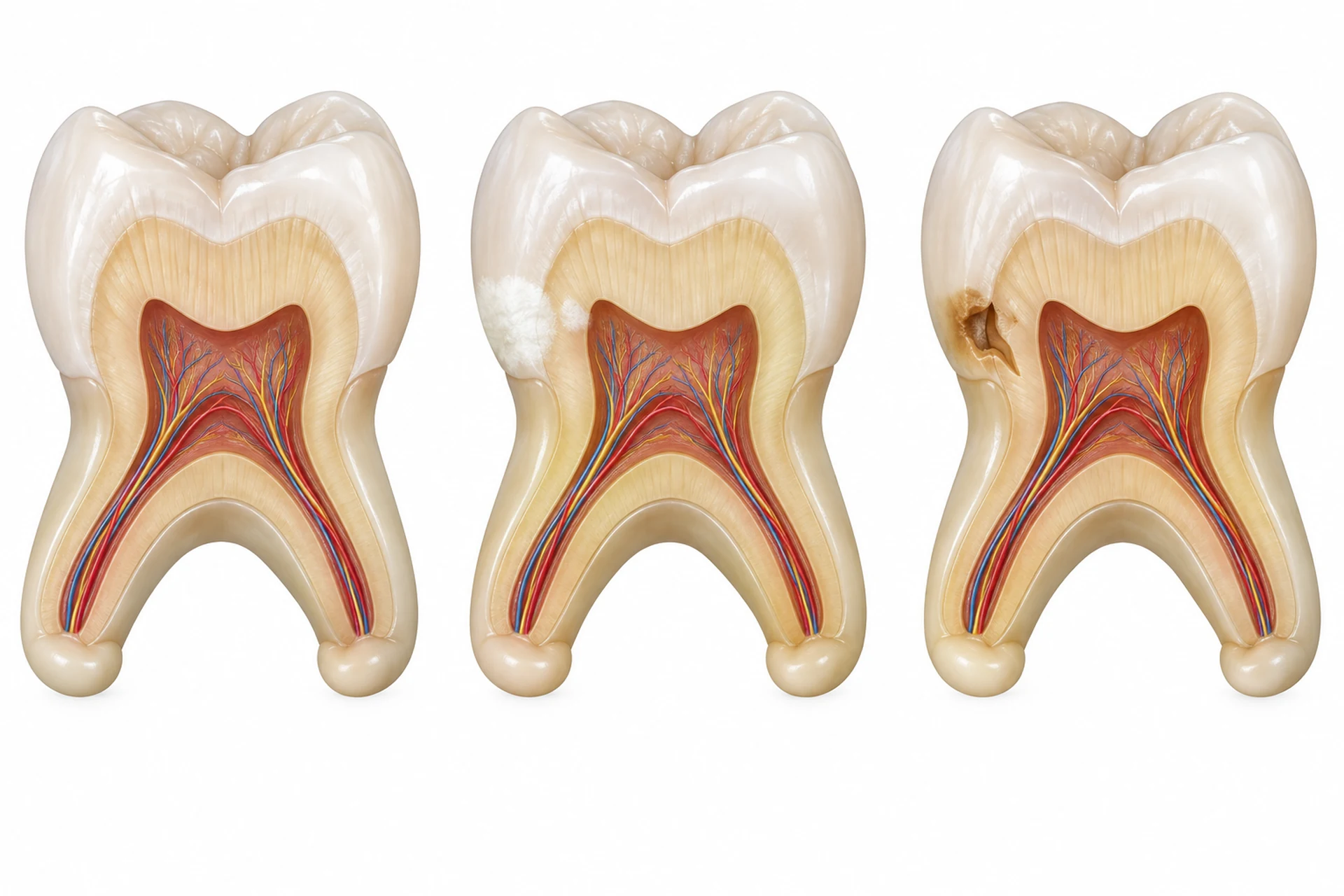
Bottles and night-time feeding: sugary drinks or fruit juice given in a bottle during sleep, and frequent night-time feeding, are associated with rapidly progressing decay in the front teeth. Drinks other than water should not be given before or during sleep.
Oral care by age, and fluoride
Brushing begins as soon as the first tooth appears in the mouth. In small children the parent does the brushing; at school age, even when the child brushes, parental supervision and support continue.
| Age | Approach |
|---|---|
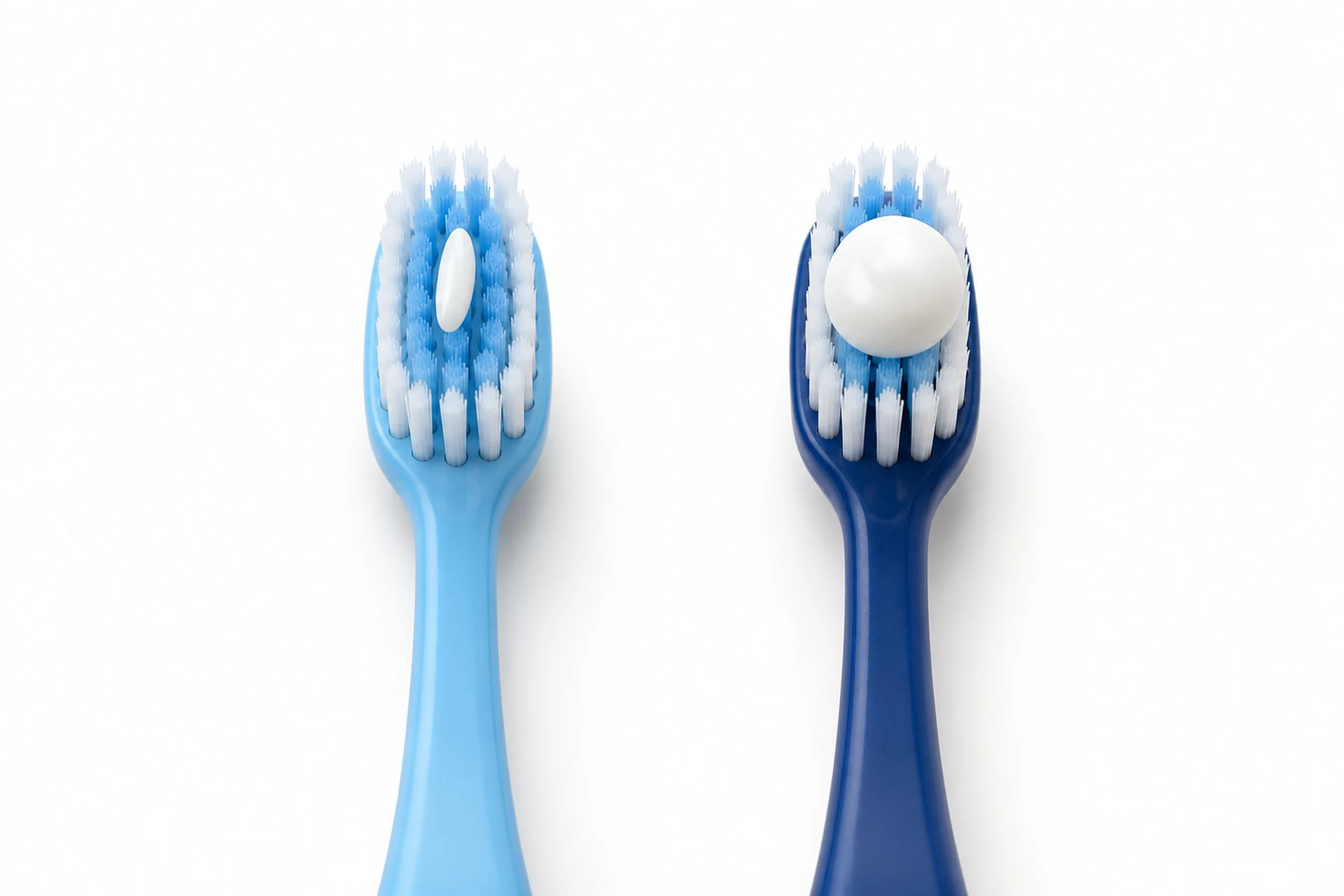
| First tooth – 3 years | Twice a day, with a small-headed soft-bristled brush. Fluoride toothpaste the size of a grain of rice (a thin smear). The parent does the brushing. |
| 3 – 6 years | Twice a day, with a pea-sized amount of fluoride toothpaste. The child brushes, the parent finishes and supervises. The child is taught to spit out the toothpaste, not to rinse. |
| 6 years and over | Brushing twice a day, with floss where surfaces touch. Parental supervision continues, gradually reducing. |
| All ages | The tube of toothpaste is kept out of the child's reach; toothpaste should not be swallowed. |
The appropriate amount of toothpaste and the need for fluoride are determined by the dentist according to the child's age and level of decay risk.
Preventive procedures
| Procedure | When is it considered? |
|---|---|
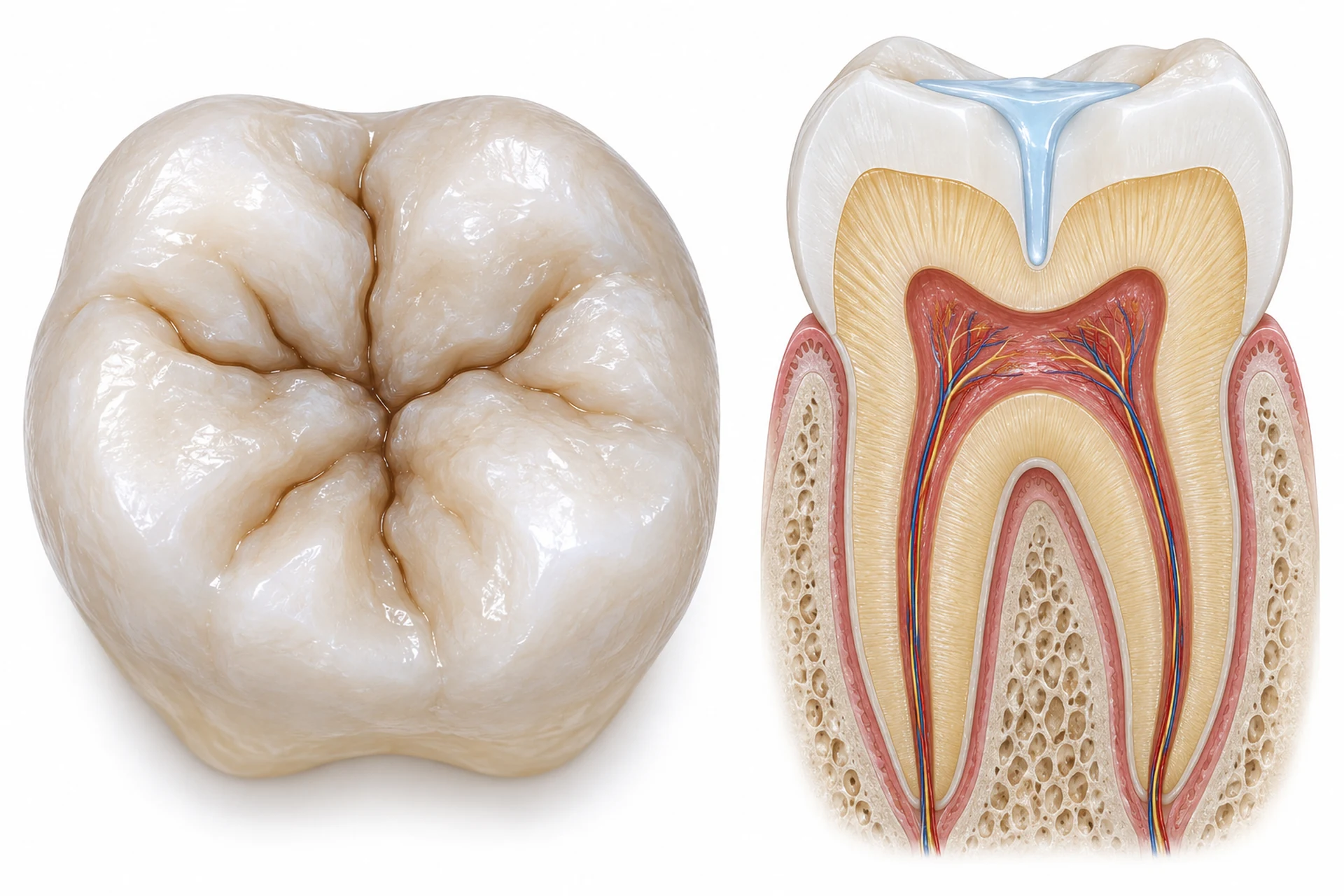
| Fissure sealant | Where deep grooves on the chewing surfaces of the molars are difficult to clean; applied after the tooth has erupted, while it is free of decay. |
| Fluoride varnish | May be applied at the clinic at set intervals, according to the assessment of decay risk. The frequency is not the same for every child. |
| Dietary advice | The frequency of sugar, snacking patterns and choice of drinks are reviewed. |
| Brushing instruction | Technique is demonstrated according to the child's age and manual skill; the parent's role is defined. |
Fissure sealants, fluoride application, space maintainers and preventive resin restorations are all carried out at our clinic.
Tooth loss and space maintainers
If a primary tooth is lost prematurely through decay or trauma, a space maintainer may be considered in order to limit drifting of the neighbouring teeth into the gap. A space maintainer is not needed after every early loss; the decision is based on which tooth was lost, the child's age, the stage of development of the permanent tooth beneath it and the radiographic findings.
Preparing a child for the appointment
- Rather than telling detailed stories of fear before the appointment, we suggest introducing the visit in a calm frame such as “counting your teeth”.
- Avoiding absolute promises such as “it won't hurt” or “there's no needle” matters for preserving trust.
- Arranging the appointment for a time when the child is rested makes cooperation easier.
- Previous negative experiences, any special needs and the medicines taken should be shared before the appointment.
For children with marked anxiety, a graded familiarisation approach is followed. For children who find it difficult to cooperate with treatment, who are very young, or who need comprehensive treatment, treatment under sedation is provided; sedation is carried out at our clinic. Where general anaesthesia is required, treatment is carried out at the hospitals we work with, accompanied by an anaesthetist and again by our clinic's paediatric dentistry specialist. The method to be used is decided together with the family after assessing the child's age, general health and the extent of treatment.
Frequently asked questions
When should I first take my child to the dentist?
Within six months of the first primary tooth appearing, and by the first birthday at the latest. Even in the absence of any complaint, this visit is made in order to assess decay risk and establish a care plan.
Primary teeth will fall out anyway — should decay be treated?
Yes. Untreated decay can lead to pain, infection, difficulty eating and early tooth loss; early loss can affect the position of the permanent tooth.
Is fluoride toothpaste safe for children?
Used in an age-appropriate amount and under supervision, fluoride toothpaste is regarded as beneficial in preventing decay. What matters is that the amount suits the age and that the toothpaste is not swallowed.
There are gaps between my child's teeth — is that a problem?
Spacing in the primary dentition is usually expected and provides room for the permanent teeth. Even so, assessment is made by examination.
Do thumb-sucking or dummies harm the teeth?
Depending on duration and intensity, they can affect the bite relationship. Where the habit continues, an age-appropriate approach to stopping it is considered.
Are paediatric dentistry and orthodontics the same thing?
No. Paediatric dentistry covers decay, preventive care and treatment of primary teeth; the alignment of the teeth and jaws is the subject of orthodontic assessment.
Local assessment
At our clinic at the Beylikdüzü–Esenyurt junction, the priority with child patients is a first meeting while they are free of pain, and early identification of decay risk. The need for treatment is planned by assessing the clinical examination, the child's age, their level of cooperation and the necessary imaging findings together.
Oral and Dental Health · Tooth Decay and Composite Fillings · Dental Trauma in Children · Root Canal Treatment · Appointments and contact