






Dental Trauma in Children: First Aid for a Fractured or Knocked-Out Tooth
The first 30 minutes: a quick summary
- Stay calm, sit the child down and apply gentle pressure to the bleeding area with clean gauze.
- If a tooth has come out completely, hold it by the crown (the white, visible part). Do not rub the root with your hand, do not brush it and do not let it dry.
- If it is a permanent tooth: if it is dirty, rinse it gently for a few seconds with milk or saline; if possible, place the tooth back in its socket. If you cannot, keep it in milk.
- If it is a primary tooth, do not try to put it back. It could damage the permanent tooth beneath.
- Get to the clinic without delay. For a knocked-out permanent tooth the first 30–60 minutes are decisive.
Call before you set off: +90 543 558 85 19 · WhatsApp — letting us know shortens the preparation time.
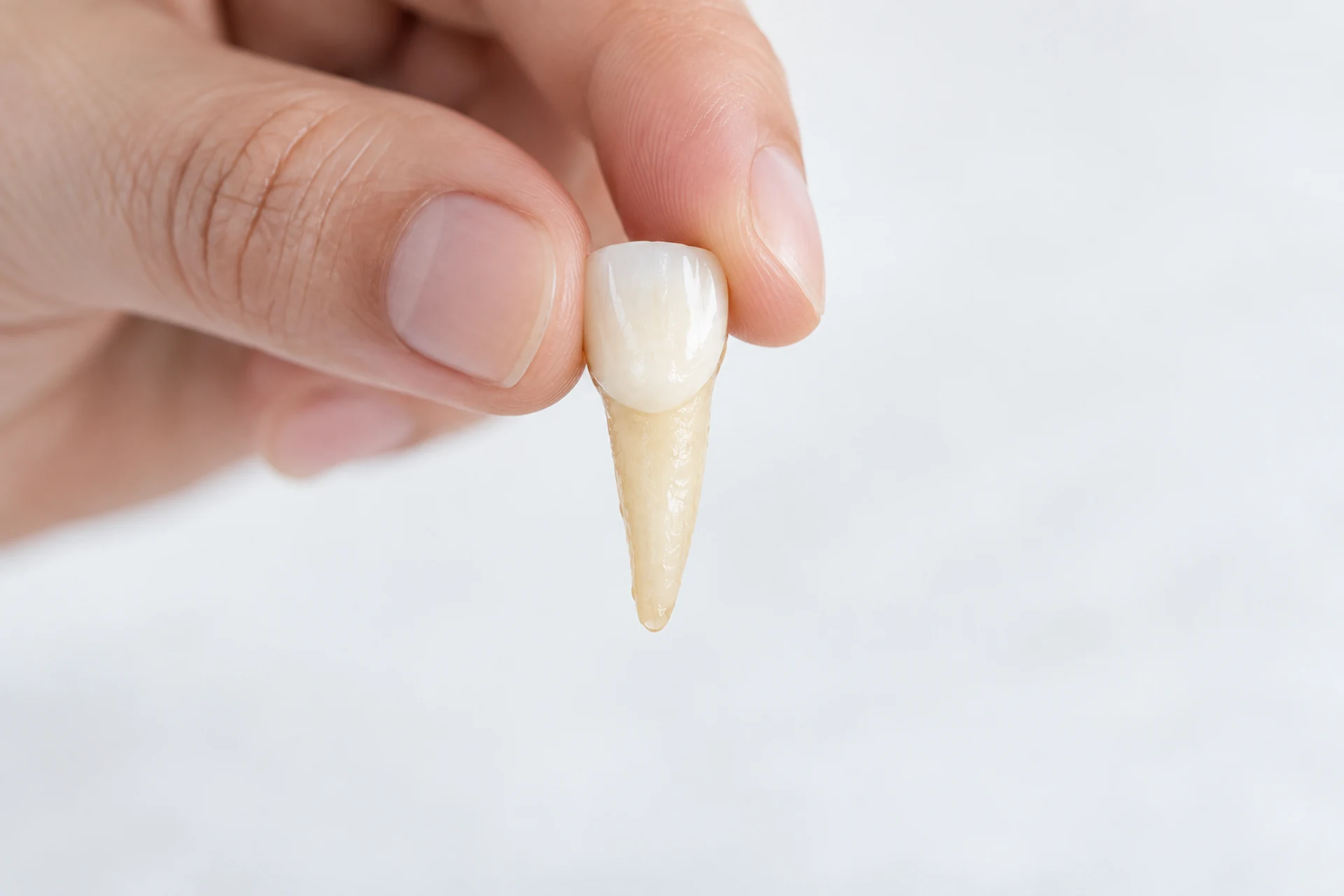
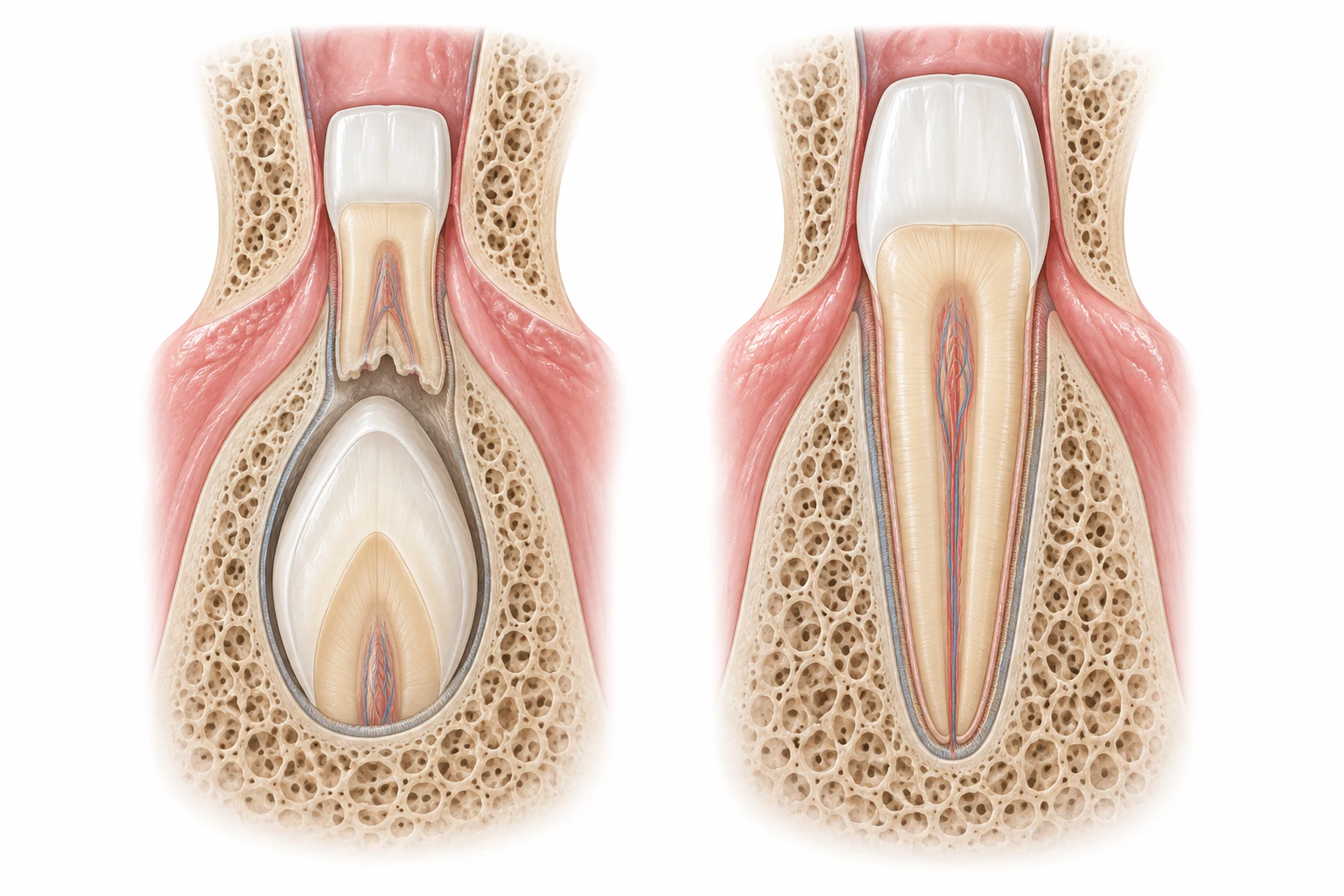
Primary tooth or permanent tooth?
What needs to be done changes completely according to this distinction. In general the first permanent incisors erupt between the ages of 6 and 8; in a child younger than this, a front tooth that has come out is most likely a primary tooth. Where you cannot be sure, do not throw the tooth away — bring it to the clinic in milk.
| Situation | Primary tooth | Permanent tooth |
|---|---|---|
| Completely out | Not replanted. Bring the tooth; the child is assessed. | Replaced in the socket straight away if possible; if not, brought in milk. |
| Fractured | Bring the fragment; sharp edges and any pulp exposure are assessed. | Bring the fragment; in some cases the fractured piece can be bonded back on. |
| Displaced | The position and proximity to the permanent tooth are assessed. | Repositioning and splinting may be needed. |
| Urgency | Assessment the same day | Minutes matter |
Why is a primary tooth not replanted? The root of a primary tooth lies very close to the developing permanent tooth bud beneath it. Attempting to put the tooth back can permanently affect the development and colour of the permanent tooth.
A permanent tooth knocked completely out
This is the most time-sensitive form of dental trauma. Preserving the living cells on the root surface directly affects the outcome, so it is essential that the tooth does not dry out.
What to do
- Hold the tooth by the crown only; do not touch the root surface.
- If there is visible dirt, rinse for a few seconds with milk or saline. Do not rub it, and do not use soap or disinfectant.
- If possible, place the tooth gently back into its own socket the right way round; the child holds it in place by biting on a clean piece of gauze.
- If it cannot be replaced, transport the tooth in milk. If there is no milk, use saline.
- Go to the clinic without losing time; telephone ahead.
What not to do
- Holding the tooth by the root, or brushing, scraping or wiping the root
- Putting the tooth in a dry tissue, napkin or pocket
- Leaving the tooth in tap water for a long time
- Having the child carry the tooth in their mouth if they are not fully conscious or are vomiting
| Storage medium | Suitability |
|---|---|
| Milk | The most easily available and suitable option at home and on the way |
| Saline | Suitable; available from a pharmacy |
| The child's own saliva | May be used temporarily if there is no other option |
| Tap water | Not suitable; it damages the cells on the root surface |
| Dry conditions (tissue, pocket) | Not suitable |

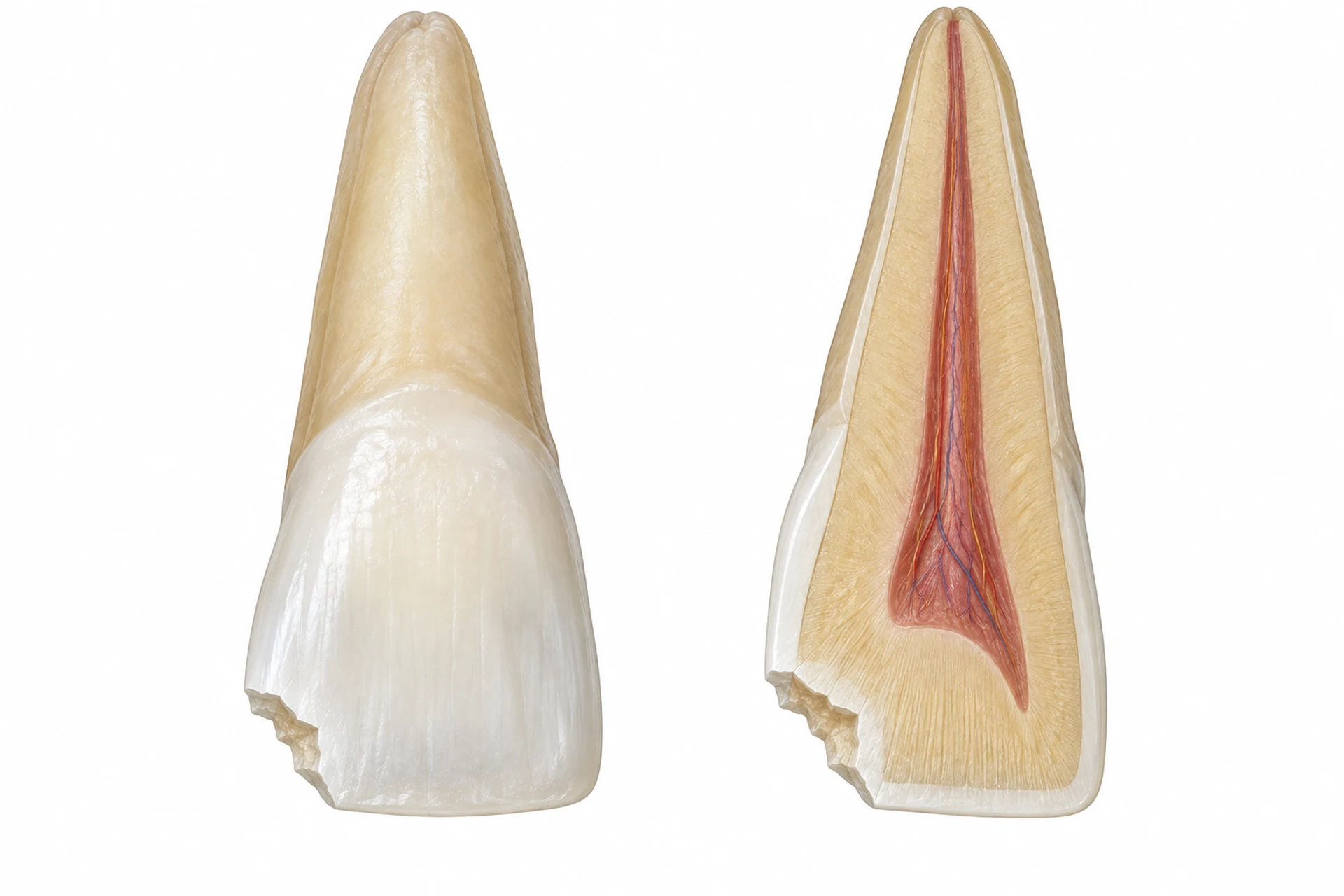
A fractured tooth
The depth of the fracture determines the treatment. A small fracture involving only the enamel is not the same as a fracture that exposes the pulp. If the fractured fragment is found it should be brought in milk or saline; in selected cases the fragment can be bonded back on.
- If a pink or red point is visible on the fractured surface, or there is bleeding: the pulp may be exposed and you should attend the same day.
- If a sharp edge is cutting the tongue or lip, it can be covered temporarily with soft wax or clean gauze.
- Even where no fracture is visible, a tooth that has taken a blow may later change colour or become painful; follow-up is needed.
A displaced or pushed-in tooth
A tooth can change position without coming out completely: it may move forwards or backwards, appear longer, or be pushed up into the bone. In these situations do not try to force the tooth back into place; give the child soft food and bring them to the clinic. Assessment is made by clinical examination and the necessary radiographs.
When to go straight to hospital
With the following findings you should go to an emergency department first; the dental assessment follows afterwards:
- Loss of consciousness, drowsiness, repeated vomiting, dizziness
- Bleeding that cannot be stopped
- Obvious deformity of the jaw, inability to open or close the mouth
- Bleeding from the nose or ear, changes in vision
- Widespread facial injury or a deep laceration
- A known bleeding disorder or the use of anticoagulants
How the injury happened (a fall, a collision, a road accident, sport) and the child's tetanus immunisation status should be reported to the clinician.
Follow-up after trauma
First aid in dental trauma is the beginning of the process. In a tooth that has taken a blow, discolouration, a blister on the gum, pain on biting or mobility may appear weeks, and sometimes months, later. Teeth that have suffered trauma are therefore monitored clinically and radiographically at set intervals. Keeping these follow-up appointments allows a late-developing problem to be caught early.
In growing children, the treatment options after trauma vary according to the stage of root development; the plan is therefore personalised according to the child's age and the radiographic findings. Both the emergency care and the long-term follow-up of dental trauma in children are carried out at our clinic by our paediatric dentistry specialist.
Frequently asked questions
Can I put a knocked-out tooth back myself?
With a permanent tooth, if the child is calm and the tooth is not very dirty, placing it gently back is appropriate. A primary tooth is not replanted. If you are unsure, put the tooth in milk and come to the clinic without delay.
Can I wash the tooth with water?
Tap water is not suitable. Only if there is visible dirt, rinse for a few seconds with milk or saline; never rub the root.
How quickly do I need to get there?
For a knocked-out permanent tooth the first 30–60 minutes are decisive. Even if that time has passed, the tooth should still be brought if it has been kept in a suitable medium; an assessment is still made.
A primary tooth has come out and a new one will replace it. Do I still need to come?
Yes. Whether the permanent tooth beneath has been affected, and whether there is injury to the gum or jaw, need to be assessed.
The tooth has darkened — am I too late?
Discolouration after trauma can appear weeks or months later. An assessment is needed; not every change in colour means the same thing.
I kept the fractured piece — is it of any use?
In some cases the fragment can be bonded back on. Bring the fragment in milk or saline so that it does not dry out.
Local assessment
At our clinic at the Beylikdüzü–Esenyurt junction, the priority for children attending with dental trauma is to establish the extent of the injury and to carry out time-sensitive procedures without delay. Telephoning before you attend shortens the preparation time.
Paediatric Dentistry · Oral and Dental Health · Root Canal Treatment · Tooth Decay and Composite Fillings · Appointments and contact