






Tooth Decay and Composite Fillings
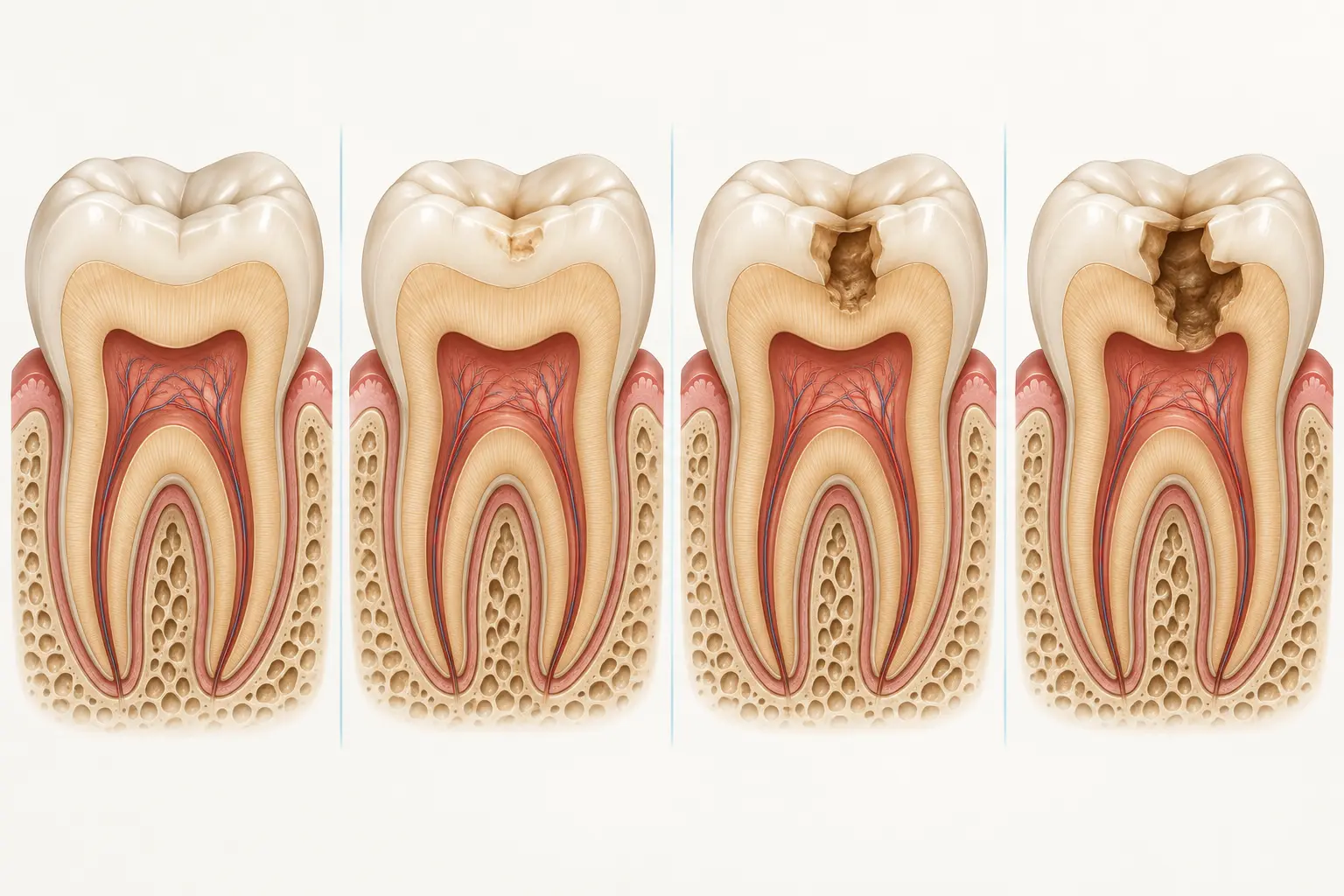
A composite filling can be used to restore tooth structure lost through decay, fracture or an old restoration, using a tooth-coloured adhesive material. Not every change in colour calls for a filling; the decision is made according to the activity, depth and cleansability of the lesion.
What is tooth decay?
Tooth decay is a process of mineral loss in which biofilm, fermentable carbohydrates, time, saliva and individual risk factors all play a part. Early lesions are not always cavitated.
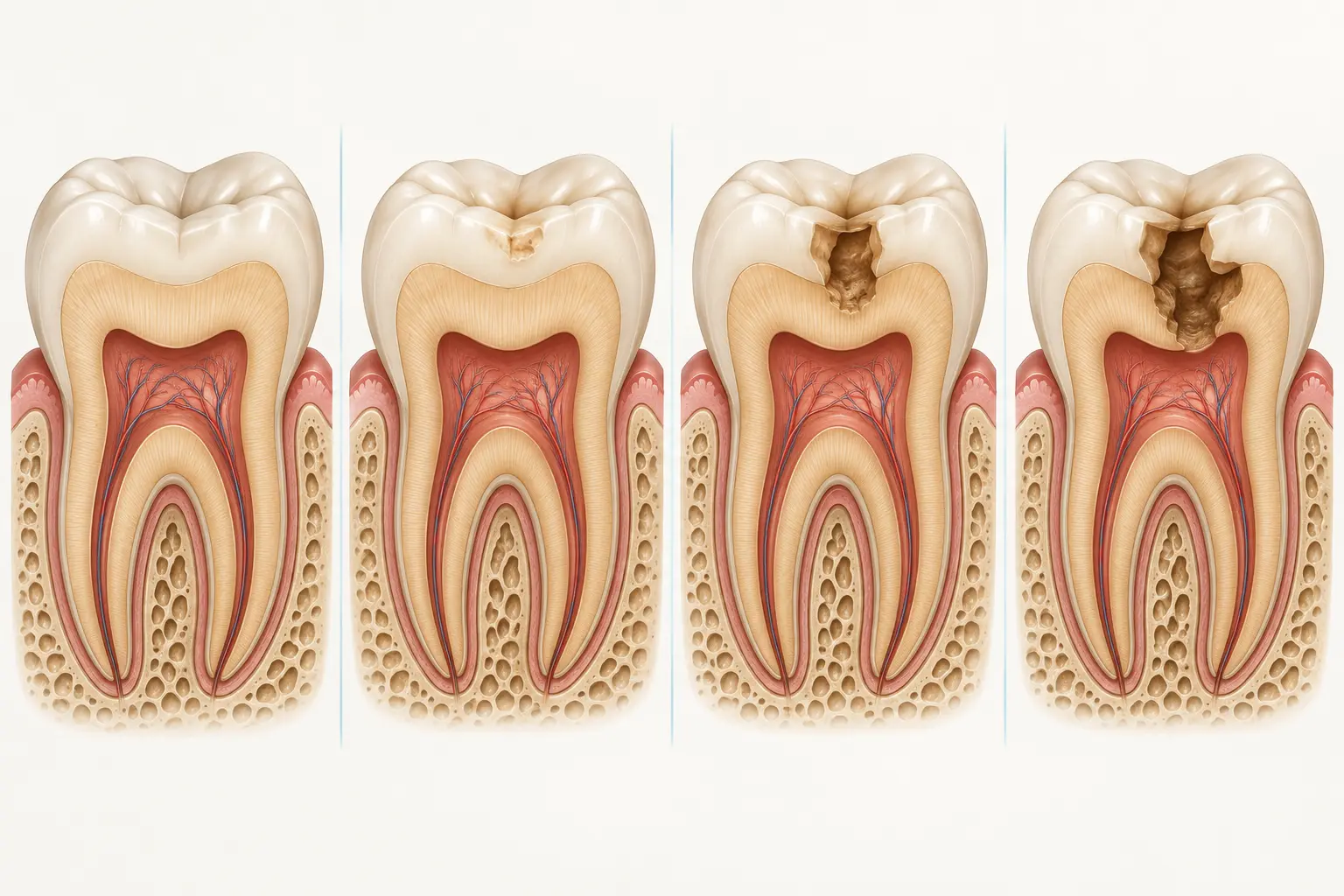
Signs
There may be sensitivity to cold, heat or sweet things, pain on chewing, food packing or a visible change in colour. However, some interproximal lesions can progress without any sign at all, which is why regular examination matters.
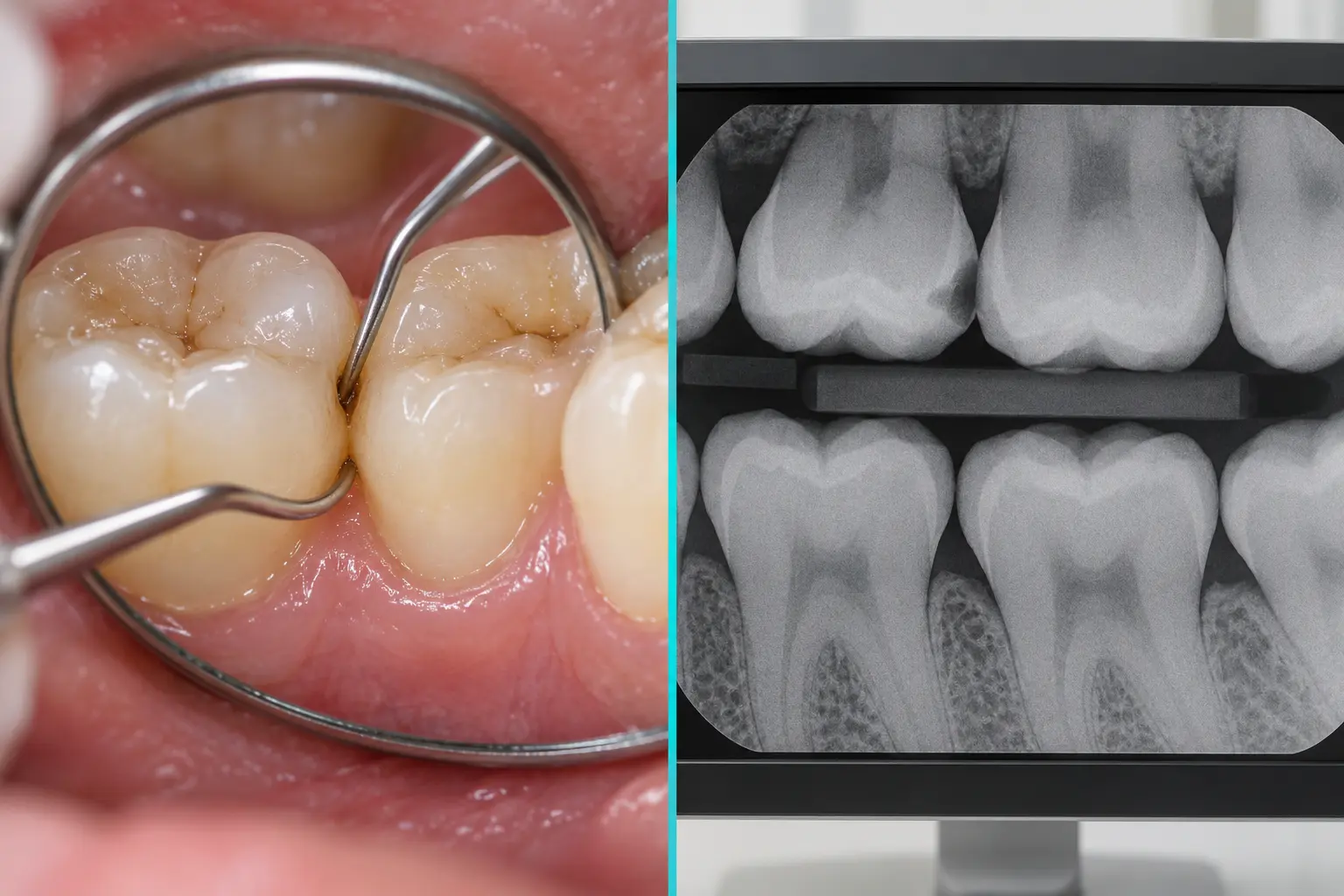
Clinical and radiographic assessment
The appearance and cleansability of the surface, the presence of a cavity, the neighbouring teeth, old restorations and proximity to the pulp are all examined. Where necessary, bitewing or periapical radiographs are added to the assessment.
The treatment plan
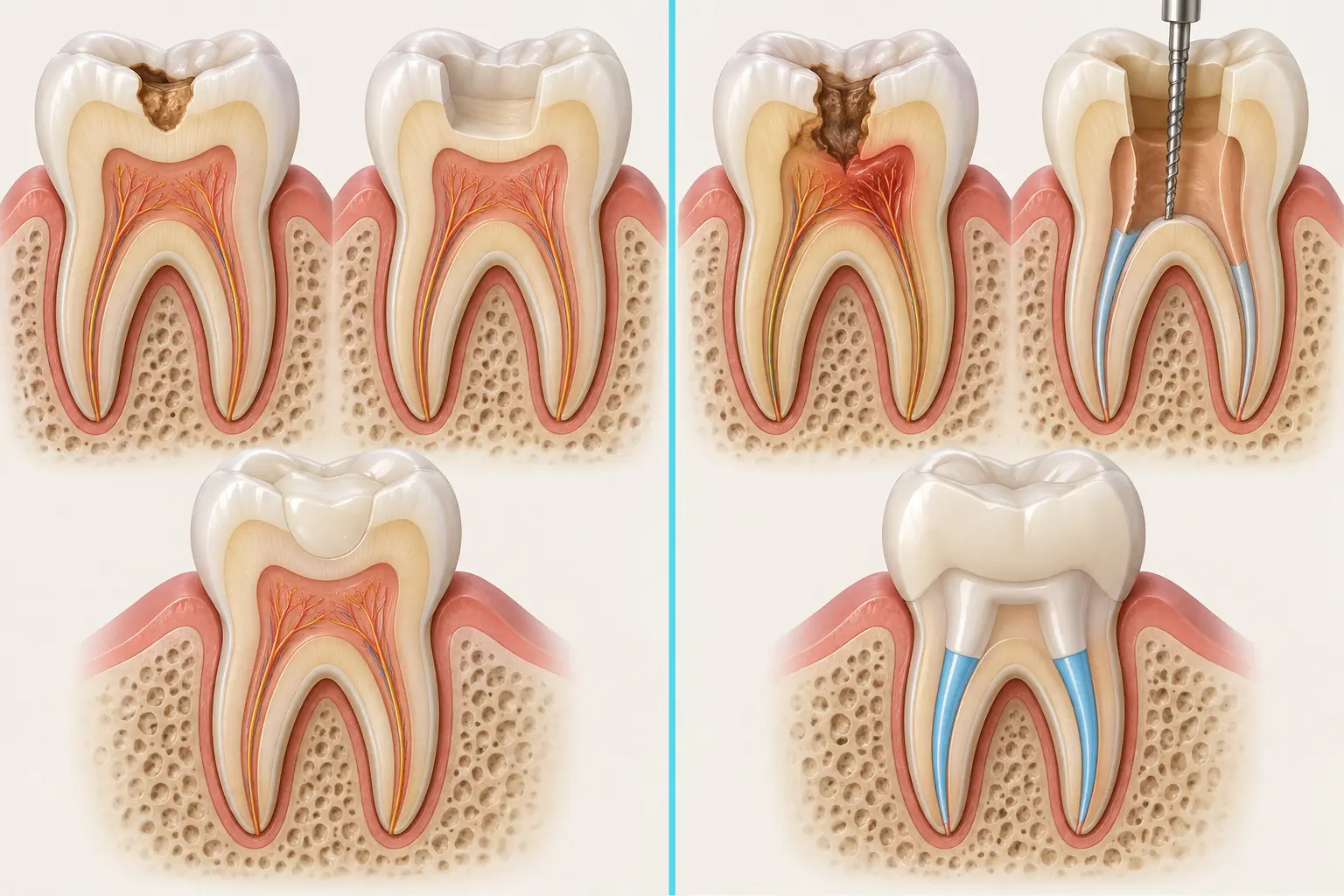
In early, non-cavitated lesions, risk control, fluoride and monitoring may be sufficient. Where a lesion cannot be cleaned or has caused structural loss, conservative restorative treatment is considered. The aim is not merely to remove darkened tissue but to control the activity of the decay, protect the pulp and preserve healthy tooth structure as far as possible.
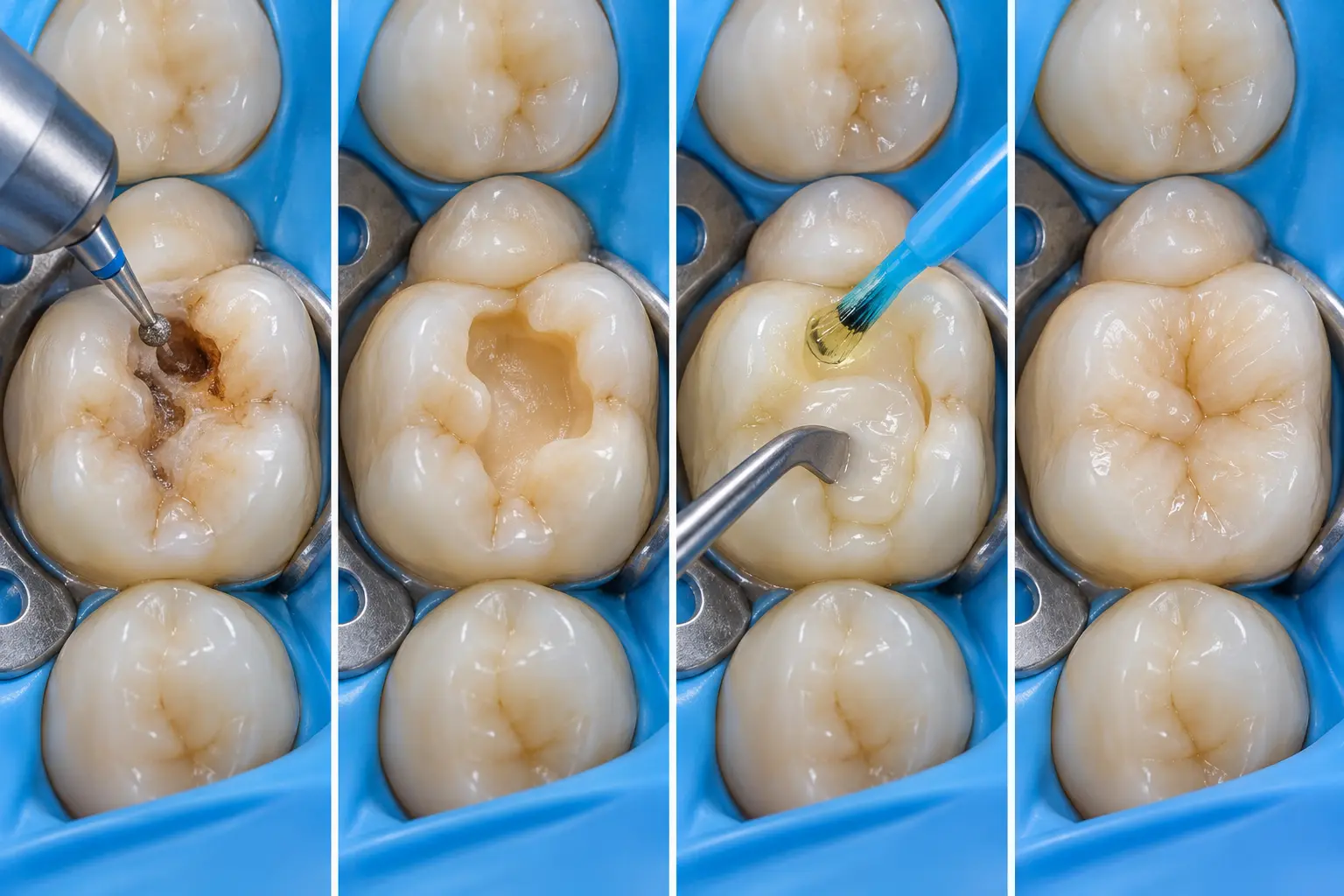
The composite filling procedure
- Shade selection and isolation
- Controlled removal of the decayed tissue
- Adhesive procedures
- Placing the composite in layers
- Checking the contact, anatomy and bite
- Finishing and polishing
Deep decay and the pulp
Where decay is close to the pulp, the history of pain, vitality tests, radiographic findings and the remaining tooth structure are assessed together. Selective caries removal, a pulp-protective procedure or root canal treatment may come into question in different situations.
After the procedure
Careful eating is advised until the anaesthetic wears off. Short-term sensitivity may occur; if there is a high contact, prolonged spontaneous pain or pain on chewing, a review is carried out.
Care and follow-up
Brushing, interdental cleaning, a diet and fluoride plan appropriate to the level of decay risk, and regular check-ups all matter. The margin of the filling, the contact point, wear, fracture and the risk of secondary decay are monitored.
Restorative options according to tissue loss
| Option | Scope | Planning note |
|---|---|---|
| Direct composite filling | Restoring the lost tissue in the mouth with an adhesive material | May be a conservative option where tissue loss is limited and can be properly isolated. |
| Inlay / onlay | An indirect restoration produced in the laboratory or digitally | For more extensive loss of substance, may be considered according to the support of the remaining walls and cusps. |
| Crown | A restoration covering the crown of the tooth more comprehensively | May come into question where there is extensive structural loss or a risk of fracture; it is not needed for every decayed tooth. A zirconia crown is one of the options. |
| Root canal treatment and restoration | Treatment of the canal system where the pulp is irreversibly affected or necrotic | The decision is made not on the appearance of the decay alone but on symptoms, tests and radiographic findings. |
Frequently asked questions
Does every cavity cause pain?
No. Early or interproximal lesions in particular may give no sign. Examination and, where needed, radiographs provide an assessment that does not rely on pain alone.
Is every dark area a cavity?
No. Discolouration may be an arrested lesion, the anatomy of a fissure, or the effect of an old restoration. Activity, surface structure and imaging findings are assessed together.
Is sensitivity after a filling normal?
Short-term sensitivity can occur; depth, proximity to the pulp and the bite may all play a part. Pain that worsens, arises spontaneously or persists calls for a review.
How long does a composite filling last?
No fixed period or guarantee of service life can be given. The size and position of the filling, isolation, the bite, any clenching habit, care and the level of decay risk all affect the outcome.
Local assessment
At our clinic at the Beylikdüzü–Esenyurt junction, the need for treatment of decay and composite fillings is determined by assessing the clinical examination, the necessary radiographs, the condition of the pulp, the bite relationship and the level of decay risk together.
Oral and Dental Health · Root Canal Treatment · Zirconia Crowns · Appointments and contact