






Early Signs of Gum Disease and Its Treatment
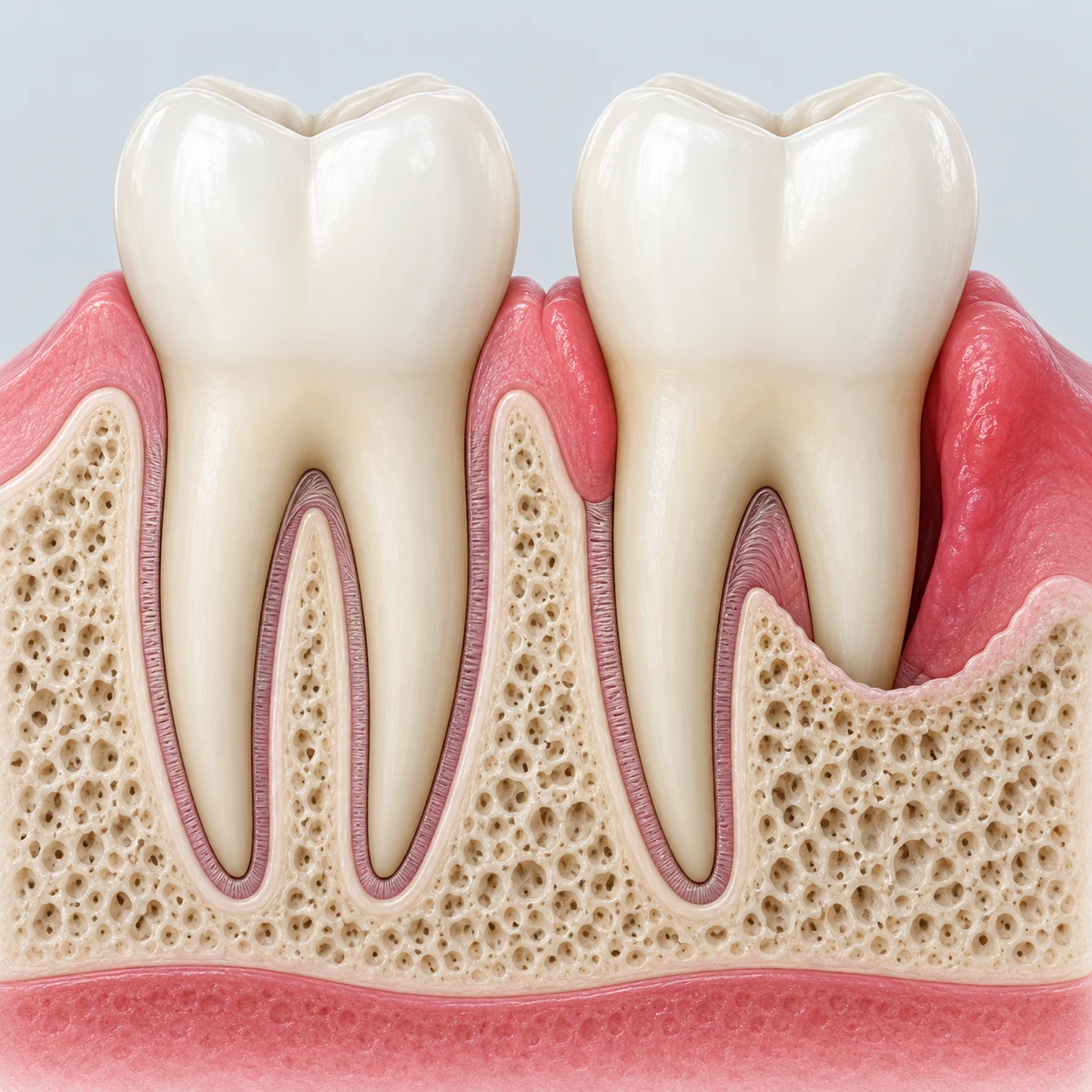
Gum disease usually begins without pain. At the first stage there may be nothing more than bleeding when brushing, which is why it is often noticed late. Yet when it is addressed early, the picture is largely reversible. Once it has progressed, the bone that holds the tooth in place is affected and the loss becomes permanent.
What are the early signs?
- Bleeding: bleeding seen when brushing or flossing is the most common first sign. Healthy gums do not bleed on brushing.
- Redness and swelling: healthy gums are pale pink and firm. A bright red, swollen and soft appearance is a sign of inflammation.
- Gum recession: teeth appearing longer, the root surface becoming exposed, and the sensitivity that goes with it.
- Bad breath: bacteria collecting in gum pockets can contribute to persistent bad breath.
- Gaps opening between the teeth: teeth drifting, spaces forming between them, or the bite changing.
- Mobility: a tooth moving at an advanced stage, showing that the supporting bone has reduced.
The difference between gingivitis and periodontitis
| Gingivitis (gum inflammation) | Periodontitis | |
|---|---|---|
| Tissue affected | The gum only | Gum + connective tissue + supporting bone |
| Bone loss | None | Present |
| Reversibility | Largely reversible with appropriate treatment and care | Lost bone does not return on its own; progression is halted |
| Typical findings | Bleeding, redness, swelling | Increased pocket depth, recession, mobility |
This distinction is made by examination: pocket depths are measured, the gum margin is assessed and, where necessary, bone levels are checked radiographically. No decision is made on the basis of a single sign.
Factors that increase the risk
Inadequate plaque control is the fundamental factor. Beyond this, smoking, uncontrolled diabetes, certain medicines, periods of hormonal change, mouth breathing, poorly fitting restoration margins and genetic predisposition can all make the picture worse. Gums may bleed more easily during pregnancy; for that period see the Dental Treatment in Pregnancy page.
How does treatment progress?
- Assessment. Pocket measurements, bleeding index, recession, mobility and radiographs where needed.
- Initial treatment. Scaling and root surface debridement; reorganising oral care habits.
- Re-assessment. The response of the tissue is usually measured a few weeks later. For most people this stage is sufficient.
- Surgical stage if needed. Where deep pockets remain, surgical options are considered.
- Maintenance. Check-ups at intervals set individually; recurrence of the disease is caught at this stage.
About antibiotics: antibiotics are not a substitute for the mechanical removal of plaque and calculus below the gum. Whether they are needed is assessed separately.
What you can do at home
Brushing twice a day with a soft brush, angled towards the gum margin; cleaning between the teeth once a day (floss or interdental brush); giving up smoking; and keeping to your check-up interval. When you see bleeding, the answer is not to brush less but to correct the technique; an area that is not cleaned keeps the inflammation going.
Frequently asked questions
Does bleeding from the gums resolve on its own?
Not without the cause being removed. As long as plaque continues to build up, so does the inflammation. Bleeding that does not settle within a few days should be assessed.
Does scaling wear the teeth away?
Cleaning carried out with the proper technique does not wear tooth structure. Sensitivity felt after cleaning relates to the root surface, previously covered by calculus, becoming exposed, and it usually settles.
Does receded gum grow back?
Not on its own. For some types of recession, surgical coverage options may be considered; suitability depends on examination.
How often should I come for a check-up?
The interval is set individually. For people with risk factors, the frequency of check-ups is increased.
At our clinic at the Beylikdüzü–Esenyurt junction, gum assessment, pocket measurement and any necessary imaging are carried out together to determine the order of treatment.
Oral and Dental Health · Tooth Decay and Composite Fillings · First Dental Examination · Appointments and contact