






Manual or Electric Toothbrush? What the Evidence Shows
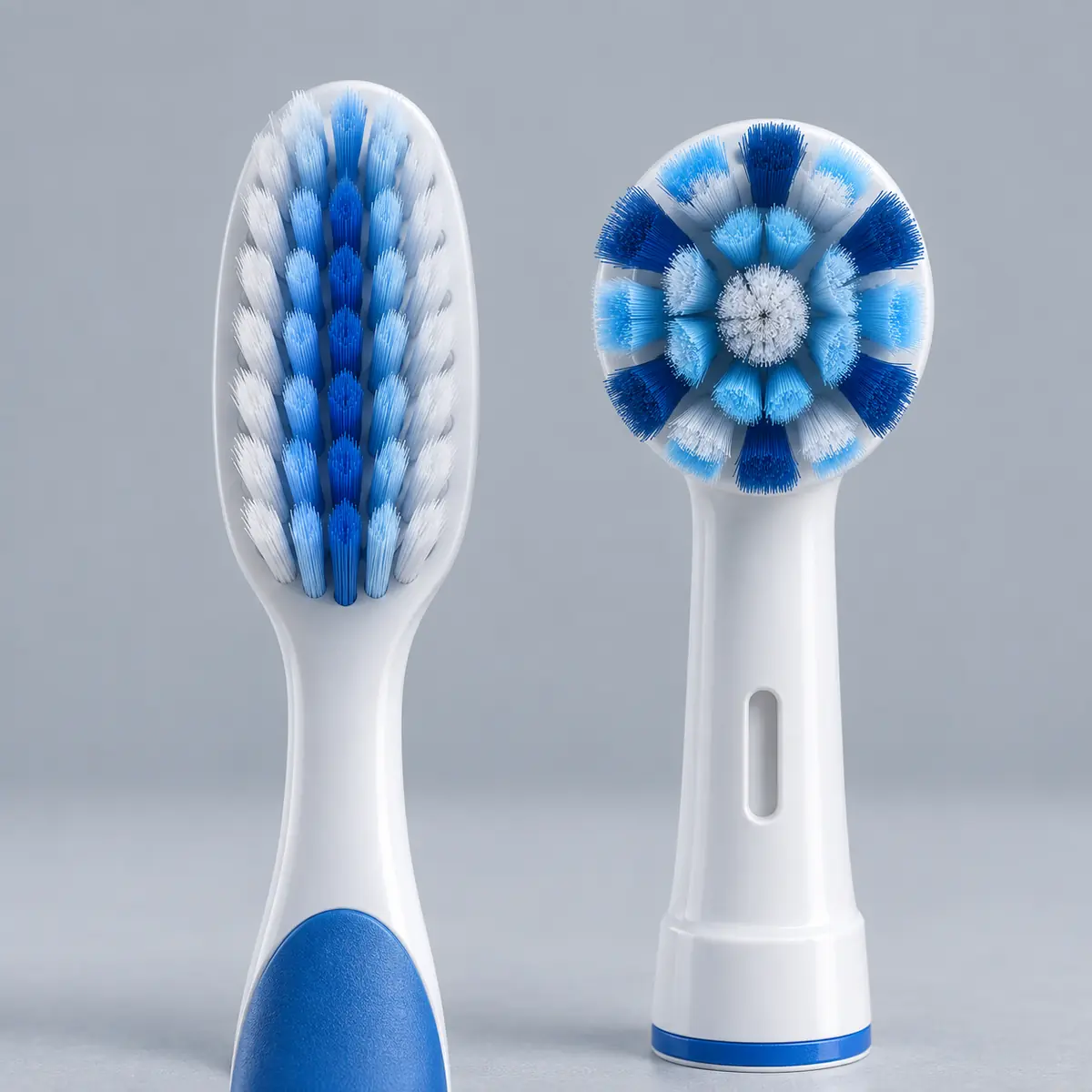
Choosing a toothbrush might seem like a small thing, but it really does affect how clean you can keep your teeth. Used correctly, both manual and electric brushes can do the job — but in some cases, electric comes out ahead.
Why does the electric brush clean better?
Electric brushes that both spin and pulse (oscillating-rotating heads) clean plaque and reduce gum inflammation better than manual brushing. This isn't a one-time effect — it holds up even after months of use. So it's not a miracle device, but choosing the right type really does make a difference.
Are all electric brushes the same?
No, they don't all perform equally. Oscillating-rotating heads give the best results. Sonic brushes are good too, just a bit behind. Ultrasonic and other electric types show more mixed results. Manual comes last on the list, but used correctly it can still get the job done.
| Brush type | Rank | Note |
|---|---|---|
| Oscillating-rotating | 1st | Most effective type |
| Sonic | 2nd | Good, just slightly behind oscillating-rotating |
| Ultrasonic | 3rd | More mixed results |
| Other electric types | 4th | More mixed results |
| Manual | 5th | Can still be enough if used correctly |
Who benefits most from an electric brush?
- Children
- Orthodontic patients — cleaning around brackets by hand is harder
- People with tired or weaker hands — the device does the brushing motion for you
- Anyone with a history of gum problems
So is manual brushing not enough?
It's more than enough, actually. Brush at the right angle, for long enough (2 minutes), twice a day, without pressing too hard — and you'll get better results than someone using an electric brush the wrong way. It's not about the brush type, it's about how you use it.
So which one should you get?
If you're a generally healthy adult, either works — it mostly comes down to comfort and budget. But if you have a child, wear braces, have tired or weak hands, or a history of gum issues, an oscillating-rotating electric brush is the stronger choice. Whichever you use, remember to replace the brush head every three months. We can figure out the best brush and brushing technique for you together at your next check-up.
Sources behind this article
According to Cochrane Oral Health Group systematic reviews, oscillating-rotating electric toothbrushes reduce plaque index by about 11% and gingival index by about 6% more than manual brushes over 1-3 months of use. A 2025 network meta-analysis pooling 19 randomized controlled trials through June 2025 reached the same conclusion. Findings on electric brush effectiveness in children come from a separate 2025 systematic review and meta-analysis.